


Menu
By theme
By theme







{{ variable.name }} : {{ variable.values[selectedVariantsIndex[variable_index]].name }}
Quantity:
The nine-prong vajra is easy to recognise. There is a grip at the middle and a section at each end; at each end one prong runs straight out from the centre while eight curve back around it and close into a flower. The more prongs there are, the thicker the body, and shrunk to pendant size it starts to look like a rod. The numbers carry different meanings too: three prongs for the three secrets, five for the five wisdoms, and the nine have several readings, some saying the nine vehicles and some the five buddhas of the directions with four consorts. The readings multiply; the form stays the same.
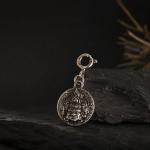
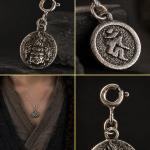
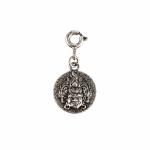
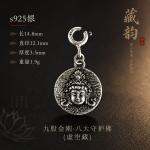
This series divides into six by deity: Manjushri, Amitabha, Thousand-Armed Avalokiteshvara, Akashagarbha, Mahasthamaprapta and Acala. Folk arrangements of the eight guardian buddhas vary, and when a full set cannot be assembled people often choose from these six. Each comes with a vajra of the same shape, and the differences sit in the mark on the head and the characters on the back. Two more exist beyond the six and are not usually stocked, only ordered, and I will not write their names for fear of getting them wrong. When ordering, give the name of the deity rather than your zodiac animal, since ordering by animal is easily mismatched.
Hang it point down, which is the common practice: point down signifies breaking through, and point up looks wrong. The hole is opened in the waist of the vajra, so the piece hangs vertically instead of lying across. Off centre by a little and the whole vajra hangs at an angle. Light should pass between the prongs. With eight closed together, a blurred gap turns the whole thing into a spindle and you stop seeing a vajra at all. Casting seams this fine in silver depends entirely on the precision of the mould. A plain band is left at the middle of the body, where the fingers hold it, so that it does not slip.
Use a dark cord: black, dark brown and navy are all steady. The lines of a vajra are hard, and a soft cord suits it better than a chain, which is too bright and steals the attention. It suits men, and does not look wrong on a woman either, sitting at the chest like a small nail. Take it off when you wear a high collar, since silver against a sweaty neck tarnishes within a day. After a summer day, wipe it before it goes back into the bag.
The points take knocks most easily, so hold the waist when putting the piece on or taking it off. Wipe along the prongs with a soft cloth when the silver dims, never across them. Dust collects between the prongs; brush along them rather than across. Do not keep two vajras in one compartment, because point against point leaves a white mark within a day. The knot hides inside the hole at the waist, and left outside it looks untidy. A silver vajra dims with long wear, and a dimmed one holds its ground better than a new one.