


Menu
By theme
By theme





{{ variable.name }} : {{ variable.values[selectedVariantsIndex[variable_index]].name }}
Quantity:
The pixiu is not a Buddhist creature. It is not in the scriptures at all; it belongs to folk tales. Stone carvings at Han dynasty tombs already show something of the sort, some with one horn and some with two, and only much later did the names merge into one. Some people count it among the nine sons of the dragon. That claim is late, and the various books give different lists, so take it as a story rather than a source.
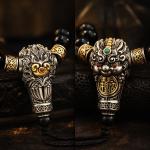
Three things identify a pixiu. A single horn, no scales on the body, and claws rather than hooves. Folk versions like to add curled cloud motifs, one on the shoulder and one on the haunch, with the tail rolled into a ball; those are decoration and not doctrine. Whether a piece is alive is decided by the mouth. Open, with lips of some thickness and teeth set unevenly, and the animal arrives. Closed to a slit, and it looks like an ornament no matter how well it is carved.
Highly polished white copper comes close to a mirror, and the pattern is carried entirely by the modelling, with no dark antique layer to help it. This finish is the most demanding there is. The spine, the claw tips, the edge of the lip, any one of them slumping and the light magnifies it. Turn a good one and the whole spine runs continuously without a break. Turn it slowly rather than snapping it round, or the light skips the shallow places where a fault would sit. In the shop, roll it in your palm and let the light sweep across from every direction. The dents announce themselves.
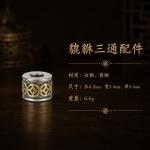
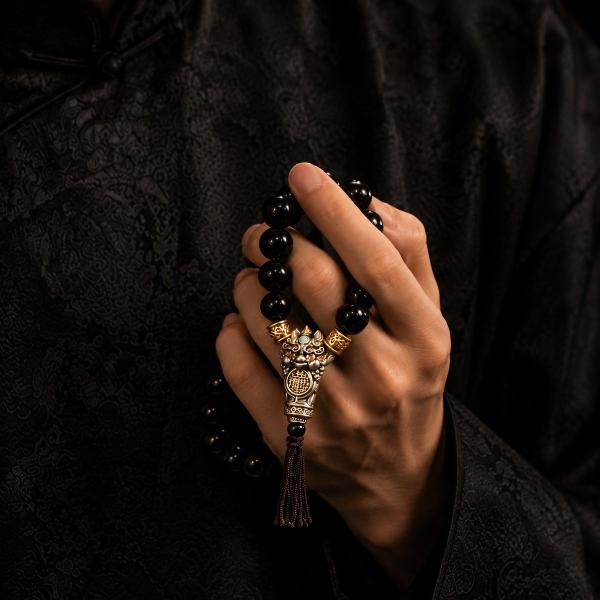
The three positions each have a use. The three-hole bead sits at the mother bead with holes running three ways, pixiu head up so the head faces the wearer. The spacer sits between beads, slightly larger, separating them and holding the line. The back-cloud hangs below the stupa bead at the back of the wrist, the most visible point on the whole strand, where poor work has nowhere to hide. Its hole is usually cut in the mouth or in the back. Hung from the back it drops truer; hung from the mouth it tips forward.
A polished piece wants keeping. The oil on your hands is the best thing for it. Worn for a while, a soft film builds up and it looks better than it did new. Do not scrub it with a cloth, because the harder you rub the cloudier it goes. If scratches do appear, a little polish worked in circles on the scratch alone, never over the whole piece. White copper changes slowly, six months to a year before you see anything. There is no hurrying it. That film is what makes an old piece look worn in rather than worn out.