


Menu
By theme
By theme

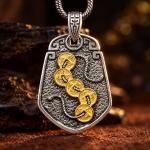


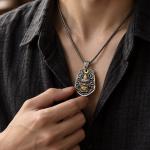

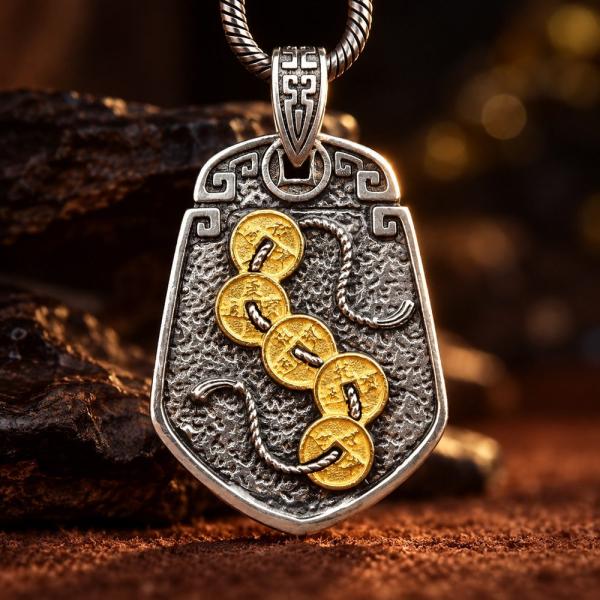
{{ variable.name }} : {{ variable.values[selectedVariantsIndex[variable_index]].name }}
Quantity:
Inlay is a second operation cut into the face. The body of the beast is cast first, with a recess left at the eye, on the back, or wherever the mouth holds something. The recess has to be even in depth with straight sides, so that the insert sits flush. Cut too deep and the insert sinks below the light; too shallow and it stands proud of the copper and comes off at the first knock. The edge of the insert is ground to a slight bevel so that it bites when pressed in; a straight edge will not seat.
The name pixiu appears early. In pre-Qin texts it is listed alongside tiger and leopard as a general term for a fierce animal rather than a fixed image. The Book of Songs, in the Greater Odes section on Marquis Han, describes the marquis receiving his rewards and ends with a line about presenting his pixiu hide: the pi was an animal offered in tribute at the time, and its pelt counted as a valuable thing. The Guangyun glosses the word simply as fierce beast. Only later did folk tradition settle it into the shape we know: one horn or two, a scaled body, a heavy belly, an open mouth, said to take in and never let out. The division into male pi and female xiu came later still. After the Han its image also mingled with the lion and the qilin, until the boundary was no longer clear.
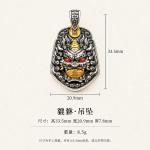
The beast's head faces forward, the body turned side-on, four feet on the ground, the tail curled over its back. This pose is common in jade and stone carving because it keeps the profile complete. The beast on a pendant does not aim at ferocity: the eye is round, the cheekbones raised, the mouth slightly open and showing teeth, and it needs a touch of fierceness to hold up. The inlay usually goes at the eye; one bright point and the whole animal comes alive. The scales on the back overlap one over another, cut shallow, flat under the finger, visible only when the light falls across them.
Dust lodges in the seam between insert and copper where a brush cannot reach, so run a cotton swab dipped in warm water along it. Do not pick at the seam with a needle, or the insert will loosen. When the copper dulls, leaving a dark ring around the insert makes the insert look brighter. Take the piece off for showers and swimming; chlorine seeps along the inlay seam and turns green over time, and that spot is hard to clean. If an insert works loose, deal with it early: a month of rubbing enlarges the recess.
The two versions differ in their fittings. The single pendant is for people who already own a chain; the hole sits behind the beast's head, and once hung the head points down, not up. The version with a Chopin chain has flat links that hang in one clean line without twisting, which suits the solidity of the body. There is a little play where the chain passes through the hole, so the pendant turns gently as you walk and more often ends face forward. Chopin links lie flat against the skin without digging in and do not catch hair.