


Menu
By theme
By theme



{{ variable.name }} : {{ variable.values[selectedVariantsIndex[variable_index]].name }}
Quantity:
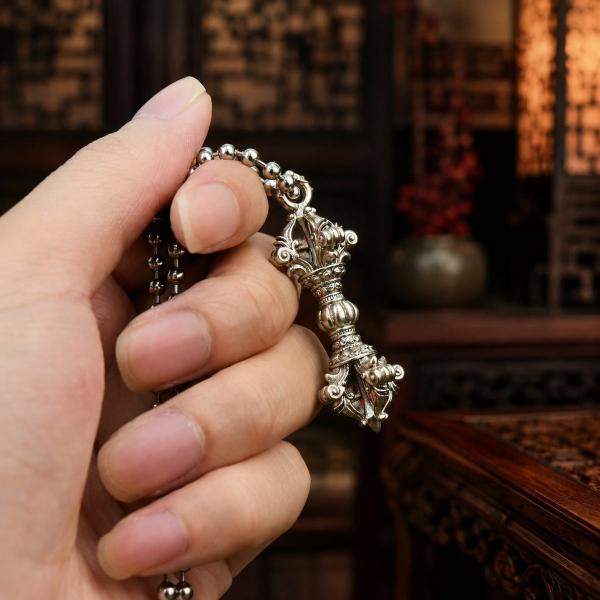
A vajra worn on the body and a vajra kept on a desk are two different problems. On a desk it can be made thick, with a centre of gravity that sits still. Worn, it has to be pressed down to a very small size and still keep the gaps between the prongs. Block those gaps and it turns into a solid bar, and at arm's length nobody reads it as a vajra at all.
This one is five-pronged. A central prong runs straight through, while four rise from the grip, open around the axis and curl back so the tips face the centre. The five are read as the five wisdoms of the five Buddhas, with the central prong standing for the wisdom of the dharma realm. The four gaps between the prongs are where the work shows. They have to let light through and must not fill in, because filled in the piece becomes a biscuit. These are iconographic correspondences, not promises about what wearing the thing will do for you. Saying more than that would not be honest.
Tibetan vajras differ in form from the Chinese versions. The heads are fuller, the gaps between prongs wider, the hooks curled deeper, and the grip usually carries two bands of beads. To see whether a piece follows the Tibetan rule, look at the grip. Are the bead bands distinct, ring by ring, and are the beads the same size. Bands that have blurred into one ring usually mean an ageing mould, with the detail lost at the casting stage. Those beads have a second use as well, since a wrapped cord catches on them and does not slip.
Once white copper is antiqued, the dark settles heaviest between the prongs, which pushes the gaps forward, and the piece reads more like a vajra than a bright polished one does. That is the argument for antiquing, and the reason so many ritual pieces would rather not be polished at all. Dry it after wearing, and keep polishing cloths away from it. They carry the dark out of the low areas and leave the piece looking like a smeared face.
Use a finer cord. The vajra is narrow, and a thick cord throws the proportion off. Tip down is the usual way to hang it, though some people wear it the other way up, and there is no right answer there. The one thing to watch is that the hooked side catches knitwear, so tuck it inside the collar on a jumper day. If you layer, do not put it on the same cord as a garuda. Both are wings and points, and side by side they look busy. White copper is cold when it first goes on and warms to skin temperature within minutes. The change is slight, but daily wearers notice it.