


Menu
By theme
By theme


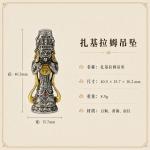
{{ variable.name }} : {{ variable.values[selectedVariantsIndex[variable_index]].name }}
Quantity:
People who go to Lhasa are usually taken to Zhaiji Temple by whoever is showing them round. It sits north of the city, small in scale, and yet the offerings there are heavy, especially on Wednesdays, when the queue at the door can curl right around the courtyard. The courtyard is narrow, and on a busy morning it is hard even to turn round. The offerings are unusual as well. White spirit. There is a smell of liquor in the hall all year, which you will not find in a temple further east.
Zhaji Lhamo is the protector of that temple, and her image is that of a Chinese woman: phoenix crown, robe, a human face rather than a wrathful one. The story is that she came to Tibet with Chinese travellers, died far from home, later manifested, and was honoured as a protector. That account circulates widely in Tibet in more than one version, with the details differing, but the part about a goddess who came from China stays the same. The white spirit is said to be there because she enjoyed a drink in life. Believers followed the habit and it became the custom.
She is a worldly protector. Not a Buddha, and not a bodhisattva. The distinction is clear in Tibetan Buddhism: a worldly protector is still inside samsara and looks after immediate affairs, while a supramundane protector is a realised being. So the way people approach her is practical. Liquor, scarves, small change, and requests that mostly concern business, journeys and matters around the house. Once that placing is clear, she will not be mixed up with Tara or with Guanyin. In front of her image the scarves are piled thick and the bottles stand in rows, a scene quite unlike a temple inland.
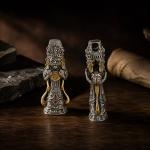
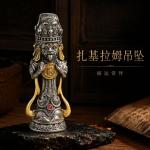
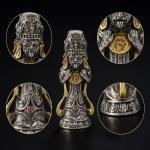
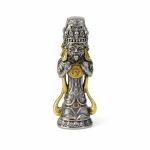
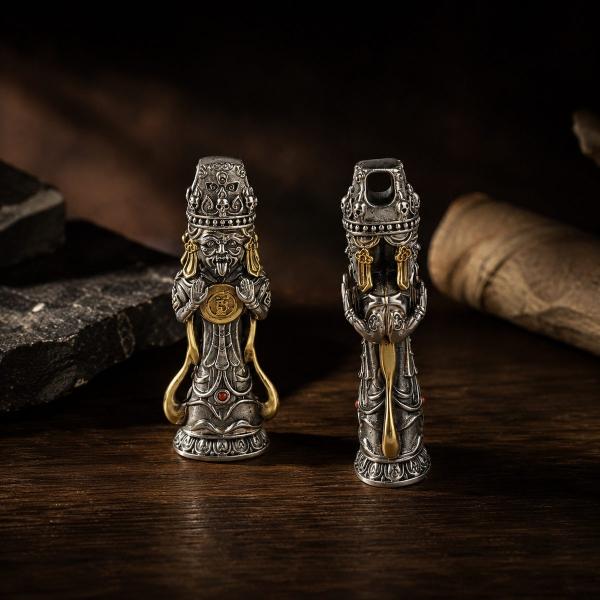
On the pendant she is seated, the wings of the phoenix crown spread to either side, the face round, the eyes long and narrow, a hint of a smile at the corners of the mouth rather than a glare. A protector with a human face is harder to make small than a wrathful one. A wrathful face can lean on exaggeration, and a little blurring still reads. A human face depends entirely on proportion, and the brows and eyes a fraction out turn common. Judge by the eye corners and the mouth; soften those two and the whole face falls in. The strings of beads on the crown are rows of small dots and the spacing has to be even, because once it goes uneven the piece looks cheap.
The cool tone of white copper sits a little oddly with this subject. Traditionally Zhaji Lhamo is painted in colour, or gilded. So judge this one on silhouette and drapery, and do not expect the presence of the image in the hall. Most people who buy it have been there themselves, or have family who went, and what they wear is a memory. Dry cloth for cleaning. The tips of the crown's wings are thin, so keep the pendant away from hard objects in a bag.