


Menu
By theme
By theme

{{ variable.name }} : {{ variable.values[selectedVariantsIndex[variable_index]].name }}
Quantity:
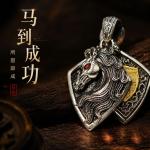
The four characters of ma dao cheng gong were originally about war. A Yuan dynasty play has the paired line “the flag opens and victory comes, the horse arrives and success follows”, meaning the warhorse arrives and the battle is won. Only later did the phrase move to exams, to business, to setting out on a journey. There is no horse in the four characters as such, only the horse arriving, so the design has to have a horse in it or the name has nothing to stand on. Empty names are common on small pieces. The plaque is inscribed, the picture does not match, and the wearer cannot say what it is.
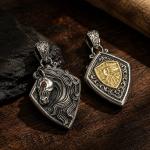
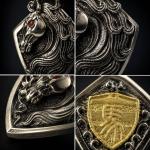
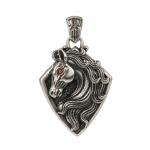
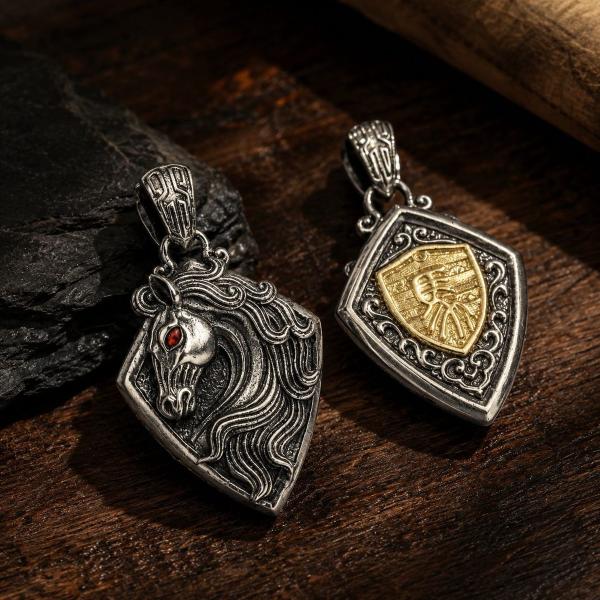
The horse here is galloping, all four hooves off the ground, mane and tail pulled back into a line, the head slightly low as though it has only just put its strength down. The pose has its roots in Han and Tang pottery horses and stone carvings, when a horse was judged by long legs, a thick neck and a tucked belly, with no decorative curls. Later taste made them fat and round, aiming at prosperity rather than speed. Look at the ears as well. Ears pinned back are a galloping horse; ears upright are a standing one. One detail settles the whole pose.
A galloping horse seen head-on is the hardest thing to make. From the front the legs overlap, the front pair hiding the back, and one slip gives you six legs or three. This piece takes the animal at an angle, head turned slightly, which gives you the profile while keeping a symmetrical frame around it. Taking the angle is a clever solution, and the price is that the plaque is not symmetrical left to right, so it hangs a little off-centre. The angle has a second benefit: the gap between belly and legs survives instead of being cast as one solid lump.
For a galloping horse in white copper, the long lines of mane and tail have to be crisp. Break the line and the speed goes out of it. Before buying, hold the piece level with your eye and half close your eyes. If it still reads as a horse running rather than a lump of metal, the modelling is sound. The four hooves need checking too. Well cast, they are separate. Poorly cast, they run together into one mass.
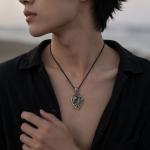
There is not much to observe about wearing it. Dark cord or leather, both are fine, worn to the chest with the head up. Some people like the head down, reading the arrival into it, and that is their business. People born in the year of the horse tend to buy it on impulse. People who were not buy it because they like the horse. I have seen plenty of both, and the second group wears it longer. White copper darkens with wear, and once it does the lines of the mane stand out more clearly. No need to polish it back to brightness.