


Menu
By theme
By theme


{{ variable.name }} : {{ variable.values[selectedVariantsIndex[variable_index]].name }}
Quantity:
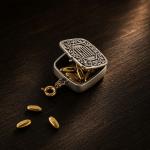
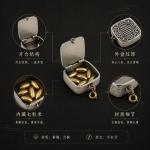
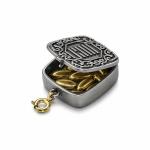
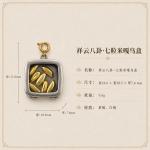
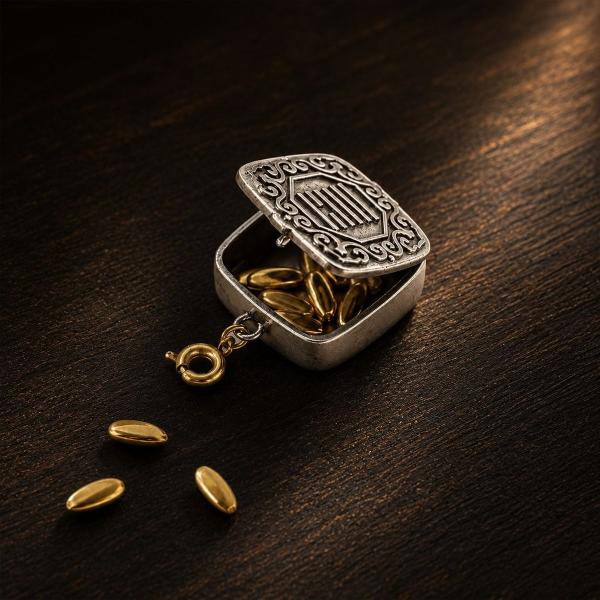
Eight in ten people who buy a gau box ask first whether it opens. One that opens has a point to it; one that does not is just a pendant shaped like a box. Gau is the Tibetan word for a small shrine you carry with you, and people used to put images, scraps of scripture, pills or incense powder inside and wear it at the chest, taking it wherever they went. The seam of the lid is the critical part: if it does not close evenly, whatever you put inside will work its way out.
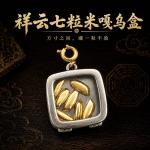
What goes in is up to the owner, and there is no fixed rule. Some people put in a single grain of rice or a short strip of prayer cloth, some a pill given by an elder, and some nothing at all, wearing it empty. The seven grains in the name is an old convention: seven grains of corn or rice placed inside, with the number seven explained differently by different households. Do not fill it to the brim the first time. Leave a little space so the lid presses shut properly.
The cloud scroll on the lid is a motif found in both Chinese and Tibetan ornament, its heads curled and stacked in layers. On a surface this small the pattern cannot be too full, or the lid looks stifled, and it cannot be too spare, or it reads as a few random circles. Here the cloud heads are gathered in tightly with a plain border left around the edge, so the whole holds together at a distance and only shows its layers close up. The relationship between the pattern and the shape of the box rewards more looking than the pattern alone.
The white copper body shrugs off everyday rubbing; what it fears is a knock that deforms it, because once the rim is out of round the lid will not seat. Keep it clear of hard objects, since bag straps and car door frames are the usual sources of quiet damage. Darkening from oxidation is normal and a soft cloth is enough, but avoid ultrasonic cleaning, because water trapped in the seams is slow to dry. The body has real thickness, so it will show through very thin clothing.
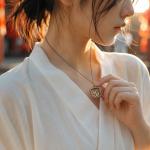
The choice is the pendant alone or the pendant with a chain. If you already own a chain, buying the pendant on its own is better value and you control the length; if you would rather not think about it, take the set and at least you are not guessing at the weight of a chain. Choose a finer chain: the box has real weight, and a thick chain under it looks clumsy rather than supportive. It suits an older recipient; for a younger one, ask first whether they mind a small box sitting at the chest. The weight sits at the centre of the chest, so check that the clasp can take it when you pair it with a fine chain.