


Menu
By theme
By theme




{{ variable.name }} : {{ variable.values[selectedVariantsIndex[variable_index]].name }}
Quantity:
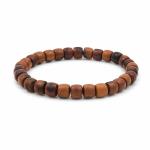
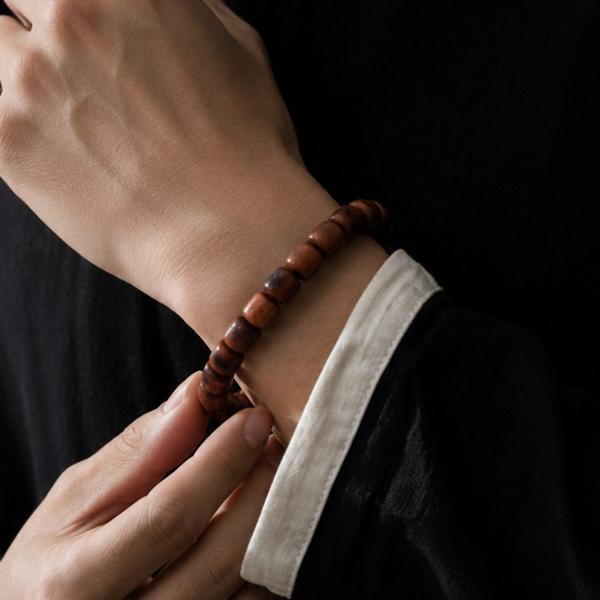
A straight-cut bead is a strip of wood sliced across into sections, flat at both ends and straight at the sides, not turned round. The trade also calls them barrel beads or column beads. Saving material is the first advantage — one strip yields a whole strand; the second is the edges, which give the hand something to work against instead of the slip of a round bead. Anyone who likes a firm feel knows it on first handling. Lengths have to match: half a millimetre out and the strand runs at a slant.
Jujube suits straight cutting because its grain runs straight, and once sliced each bead’s grain lines up with the next, so the strand reads as one piece of wood. Round beads cannot do that; the turning scatters the grain and every bead runs its own way. At the counter, lay the beads in a row: the strand whose grain joins up is the one made with care, and the one that does not is probably cut from offcuts. Jujube sapwood is pale and heartwood red, so a strand with both looks mottled.
Count follows wrist size, and one bead more or less is obvious, so string a test loop rather than buying to a number. Straight-cut beads leave small gaps and a little cord shows through, which looks better than hiding it. Elastic cord must be doubled; a single strand goes slack after two pulls, and in summer sweat it breaks without a sound, and you find out when the beads are on the floor. Drill the hole centred: off-centre, each bead is thick at one end and thin at the other, and the strand spins.
Wood beads fear water. Left on for hand-washing, water goes up the hole, and the cord rots first while the wood swells after. A swollen bead raises a nap that feels rough and needs fine paper along the grain. If it does get wet, press it dry with a cloth and leave it a day in the shade — no hairdryer, since hot air cracks it faster than the swelling did. Northern winters with central heating dry wood out and split it; a cup of water in the cupboard helps.
Handled long, jujube darkens from light red toward date red, and the process is slow and cannot be hurried. Dry hands are slow; sweaty hands are fast but prone to patchiness. Every so often wipe it with cotton cloth to take off the surface sweat, and the colour evens out. There is no shortcut with a wooden strand; wearing it is the only method, and oil and wax are only assistants. Some find it plain, but plain is what lasts — one brass spacer to lift it is enough, and no more. In summer, wipe it dry when you get home; sweat left on the beads turns them dull within days.