


Menu
By theme
By theme

{{ variable.name }} : {{ variable.values[selectedVariantsIndex[variable_index]].name }}
Quantity:
In the Classic of Mountains and Seas the nine-tailed fox lives at Qingqiu, and the text says its voice is like a baby’s and that it eats people. Not a flattering line, but it is what the text says. On Han stone reliefs it crouches beside the Queen Mother of the West as an auspicious beast; only later, in novels, does it become a demon. Follow the thread and the figure changes several times, and any one telling is only one stretch of it. Where Qingqiu lay is disputed among commentators; that it was not in the central plains has never really been in question.
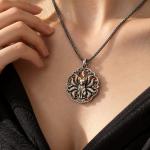
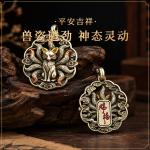
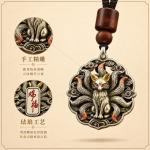
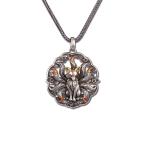
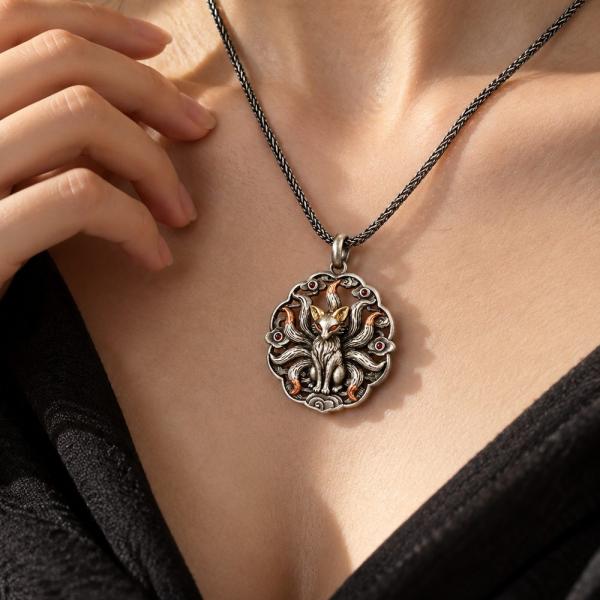
The pendant takes the nine tails. They fan out, one lying over the next, each tapering to a tip. That is the hardest part of the piece: too fine and the metal will not fill, too coarse and it looks like nine brooms. This is where antiquing earns its place — dark left in the hollows separates tail from tail by shadow, far more legible than an all-bright surface. The roots of the tails have to run together in one mass; break them apart and the fan falls to pieces. That is where the casting drinks the most metal, and where most rejects come from.
On cast white copper the tips are where metal runs short. Turn the plaque sideways to the light and check each tip for shrinkage. A shrunken tip is not a second; it just does not look good. The polisher works around the gaps between tails, bringing the front of each tail up bright and leaving the back rougher — light against dark is what gives a fox tail its fur. Antiquing holds the dark down in the gaps and leaves the tips bright, so the nine tails can be counted one by one instead of reading as a single patch of hair.
Two options, the pendant alone or with a Chopin chain, and the difference is whether you want it complete in one go. The fox is a light subject, so keep the chain fine; a heavy one weighs the whole piece down and makes it look clumsy. The ring sits above the root of the tails, so the weight hangs low and the plaque sways a little as you walk. It is not thick, so it disappears under clothing and is not stifling in hot weather. Chain length just below the collarbone suits it best — longer and the fox drops onto the placket and swings as you walk. Some backs are given a fine brushed finish that feels like silk under a finger; that is a different approach again.
On meaning, keep it restrained. In folk tales the nine-tailed fox is seductive, uncanny, and auspicious by turns; the readings sit side by side and nobody can settle it for good. If a customer asks about marriage, say it is an old motif, bought mostly because it looks well, and promise nothing. Do not scrub an antiqued piece hard with a silver cloth — take the dark off and the tails go flat. Some people find the name too suggestive, and for them it is the auspicious beast of Qingqiu: same object, two ways of putting it, depending on who is across the counter.