


Menu
By theme
By theme




{{ variable.name }} : {{ variable.values[selectedVariantsIndex[variable_index]].name }}
Quantity:
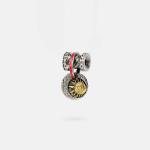
A seed syllable compresses the name of a buddha or bodhisattva into a single sound in Tibetan practice, painted at the heart or on the lotus seat in a thangka. One syllable stands for the whole figure; that is how it is used. Zakhirelmo has her own seed syllable, cut on the front of this bead. The placement of a seed syllable on a thangka is strict: get it wrong and the rules of the whole painting are thrown out. This bead takes the one syllable and nothing else, as simple as it can be.
Her form has a dark face, glaring eyes, the tongue out of the mouth, and a crown on the head. The image is common on thangkas and clay figures around Lhasa. At first sight it tightens the chest; look long enough and you understand it is a protector's face — the fierceness is for outsiders. Her crown is usually skulls, five in a row, a common ornament for protectors rather than a scare tactic. The whites of the eyes are left large; that is what lets the ferocity out.
Enamel is laid into the recesses of the lettering and the border lines and fires bright, setting up a contrast with the matte face of the white copper. One or two colors only; more and it turns busy. The number of firings decides the thickness of the glaze: two passes resist scratching better than one, and you can see the difference against the light. Glaze shrinks in the fire, so it must be filled slightly above the cell wall to come out level. That amount is a matter of experience; miss it and you have a pit.
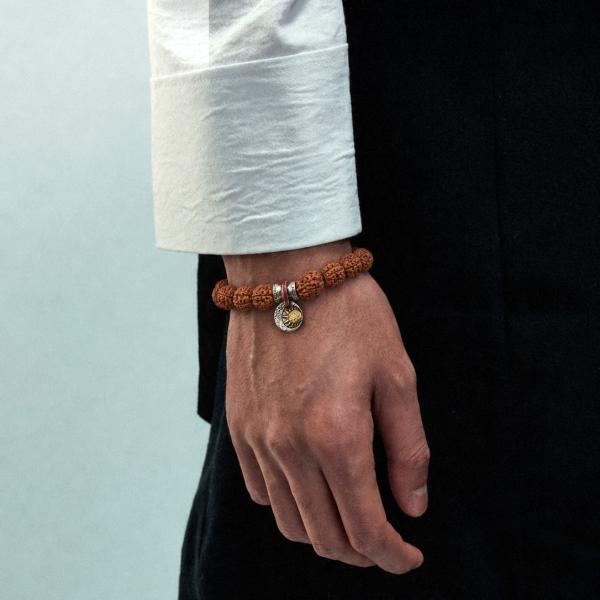
A spacer is meant to be strung, so the hole runs through the sides, with a small chamfer at each mouth so the line doesn't fray through. A cylinder strings more easily than a square bead; the corners of a square bead press against their neighbors and after long wear leave marks on them. You can't see that in the shop; you find out once it is strung. Cylinders go in pairs at the twenty-seventh position, and as the string turns the characters face one way, which is what looks right. Characters face out — that is the rule for wearing spacers.
A seed syllable is a religious sign and doesn't suit being used as pure decoration on a whim. There is no harm in wearing one without knowing it, but don't set out to explain what it stands for; a wrong explanation is more awkward than none. Someone asked whether it can be worn to bed. I said yes, but the edge of the enamel rubs on the pillow, so better to take it off. If you really want to know how the syllable is pronounced, ask a monk at a temple and take the bead with you; that is clearer than describing it. The people there have seen everything and won't think the question naive.