


Menu
By theme
By theme

{{ variable.name }} : {{ variable.values[selectedVariantsIndex[variable_index]].name }}
Quantity:
The green on a thangka is ground from malachite, and it comes out cool, not warm the way a grass green is. Green Tara is entirely that color, which is where the name comes from. In the same group are White Tara and Red Tara; the twenty-one Taras each have their own color and hand gesture. Malachite is a mineral pigment, and how finely it is ground decides the depth: coarse goes dark, fine goes bright. A single thangka usually carries more than one layer of green.
Her posture has the right leg extended and the left folded in, which is called the half cross-legged seat. The extended right leg has a meaning behind it: she is ready to rise at any moment, without waiting to be asked. The posture is the most typical thing about Tara images; look at the legs and you know which one it is. The half cross-legged seat is rare in Chinese bodhisattva images, which mostly sit fully cross-legged and upright. Set the two traditions side by side and the difference shows at once. Her hand gesture is not painted the same everywhere, and posture is a surer guide than hands.
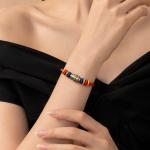
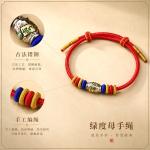
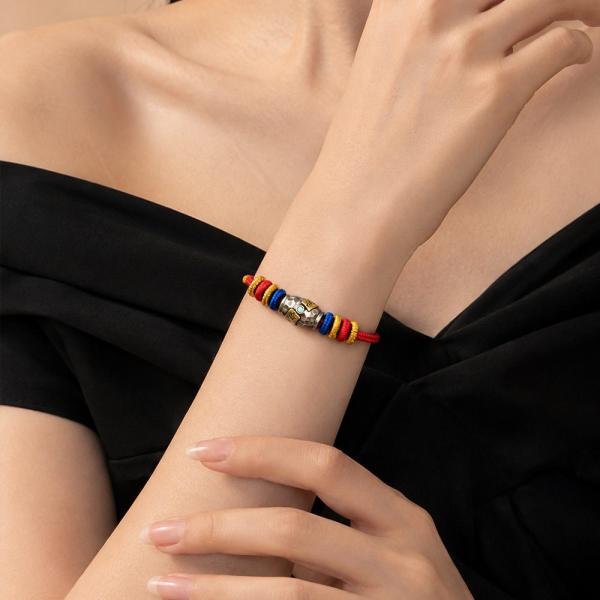
The heart mantra is ten syllables, short, and repeating it does not tire you. The ten syllables go once around the bracelet with space between them: from a distance a row of dots, up close the characters. The lettering is on a white copper plate pressed into the middle of the cord, with a spacer bead on each side to hold it. One of the ten syllables is the seed syllable; the rest are words of praise around it. Only someone who has studied the thing can tell which is which.
A braided bracelet is all about tension: too tight and it pinches, too loose and it spins. Measure the wrist against the bone and add a centimeter; that is the comfortable size. Leave two centimeters at the tail, cut it even and singe it, or it unravels. A slender wrist should not have the braid made too short: hands swell in summer and shrink in winter, so leave a little margin and it can be worn all year. Don't cut the tail the moment the knot is tied; wear it a day and then fix the length. Use waxed thread, which resists sweat better than cotton and does not mildew.
For a young woman this Green Tara version is the most readily accepted, and the color pleases. People ask whether it works, and I only say it is an old mantra, many people recite it, and wearing it settles the mind. If you really have a wish to make, you have to go to a temple yourself; the bracelet is only a reminder. Over time the cord remembers the shape of the wrist, and a new one feels wrong. That is also why it wears so well. A slip of paper in the packaging names the mantra, so the receiver can look it up later.