


Menu
By theme
By theme



{{ variable.name }} : {{ variable.values[selectedVariantsIndex[variable_index]].name }}
Quantity:
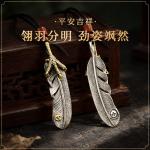
An eagle claw beside a feather describes the instant a bird of prey takes hold of something. The claw in front, the feather behind, a stretch of open space between them, and the sense of motion arrives. Both silver and copper work have used the subject; plenty of people make it, few make it hold, and the difference is where the tip of the claw and the root of the feather meet. Join those badly and the whole piece falls apart. The gap in the middle is where the design shows itself, because empty space is what gives it grip.
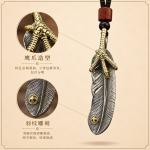
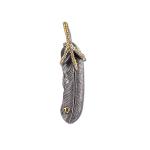
Cast in white copper, detail survives, provided the mold was cut fine enough. The cross-ridges on the claw run in rings and should be slightly uneven in spacing to look real; perfectly even spacing reads false. The shaft of the feather should stand proud and the vane should be thin, thin enough that a little light shows along the edge, which means material was taken down there. Antiquing pressed on top leaves the hollows black and the highs bright, with a trace of copper color at the claw tips as if worn there. Copper conducts heat fast; it is cold for a moment in winter and then you stop noticing.
The pendant is not large and hangs anywhere. At the neck, keep the cord long enough and let the claw point down against the breastbone; it will tap lightly as you walk, and you get used to it. On a bag, keep it away from keys, because copper against copper is scratched within three days. There is no men's version and no women's version, and there never was. Broader shoulders carry a larger piece; on a thin neck a long drop looks like it is dragging. Cord color matters as well: black is the safest, brown reads vintage, red is particular about who wears it.
White copper starts cold white and warms toward yellow with wear. That is the nickel in the alloy meeting sulfur in the air, not plating coming off, and it does not polish back. To slow it down, dry the piece after you sweat before putting it away. Once the antiquing has worn through, the hollows show red copper first and the color gets busier. Some people like exactly that, and some think it looks dirty. Both views are reasonable.
The hole is where small pieces like this go wrong most often. Drilled off center, the pendant hangs crooked; drilled too small, a thick cord will not pass. When it arrives, thread a cord through before you tie anything. Cord furrs up with use, so replace it every six months; that is cheaper than losing the pendant when it finally breaks. Bag the piece when it is not being worn and do not mix it with coins, because copper grinds against copper and the black powder gets everywhere. If the hole has a burr, roll a strip of fine abrasive paper into a tube and turn it twice. Do not scrape with a blade, which cuts a bevel into the rim.