


Menu
By theme
By theme




{{ variable.name }} : {{ variable.values[selectedVariantsIndex[variable_index]].name }}
Quantity:
A spacer is punctuation in a strand. A small bead between two large ones sets the rhythm; a whole strand at the same size goes dull on the eye after a while. The round spacer is the most basic kind, turns smoothly, and sits in between without stealing attention. Spacers are also called accent beads or clip beads, and the name varies by region for the same position. Four or five go on a strand, so buy them all at once, or the second batch will not match the first in color.
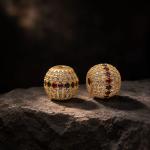
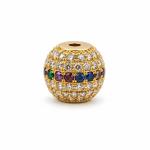
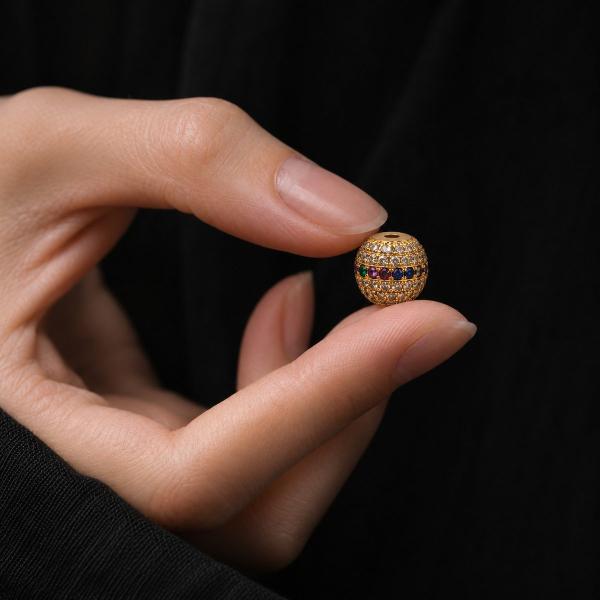
A copper base set with colored zircon, and the stones come in more than one color, red, blue, green, clear, whichever the photograph on the page shows. A colored zircon has many facets and scatters light as soon as it catches any, and the dark copper underneath sets it off. The setting has to be pressed flat; pressed crooked, the stone tilts, and a tilted stone catches thread. The fire of a stone depends on the cut and the light, and daylight is the truest test, since everything looks bright under a lamp. Prongs left standing proud catch on knitwear, so mind that if you wear sweaters.
The diameter has to be stepped away from the main beads. A spacer two sizes smaller than the main bead gives the most comfortable layering; at the same size it stops reading as a spacer and becomes a second main bead alongside the first. Hole size is a separate question: too small and a thick cord will not pass, too large and the bead shifts, and over time the hole wears oval. Hole size is usually consistent along a strand, and if the spacer hole is smaller than the main beads, the cord bends inside it and furrs up. A chamfered hole lets the cord run smoothly; without one, the cord frays at the edge.
There are a few routes on color. Shades within one family, which is safe; a complementary clash, which is lively; all copper with no stones, which is the plainest. Colored zircon is easy to overdo, so one or two colors per strand at most, because more looks like candy. Fix the dominant color first and let the spacers follow, and it will not get away from you.
Copper oxidizes and zircon does not. As the copper darkens the stones jump out more, which some people like and others find mismatched. Wipe with a dry cloth and do not soak it; water in the setting turns green in time. Small pieces like this go into a compartmented box when not in use; jumbled together, the stones take small chips off the corners of the copper. If the edges of the copper are sharp, run fine abrasive paper over them before stringing rather than waiting for them to wear the cord. Store them one to a compartment so they do not knock against each other.