


Menu
By theme
By theme





{{ variable.name }} : {{ variable.values[selectedVariantsIndex[variable_index]].name }}
Quantity:
A side charm hangs on the flank of a strand, off the main line, suspended from the cord by a small ring or a clip. Sitting at the sides, it swings as you walk and is livelier than a pendant at the center. It is common on Tibetan strands and has been used a good deal on Han-style wrist strands in recent years. A side charm has to be light; heavy and it pulls the whole strand off balance. On a wrist strand it turns to the inside when you rotate your wrist and stays out of the way, which is part of the appeal.
The ring is the weak point of a side charm. It has to turn freely; a ring that has been soldered shut hangs at an angle and twists the moment it swings. The mouth of the ring should be rounded, because one left sharp will cut the cord. Check before buying whether the ring is live or fixed, since the photographs usually do not show it and one question settles it. There are two kinds of live ring, the split ring and the swivel, and the swivel lasts longer. Ring thickness matters too: too thin and a heavier piece pulls it straight, so replace it as soon as you see a wear mark rather than waiting for the cord to break.
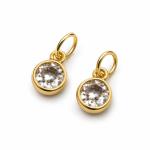
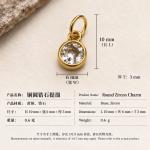
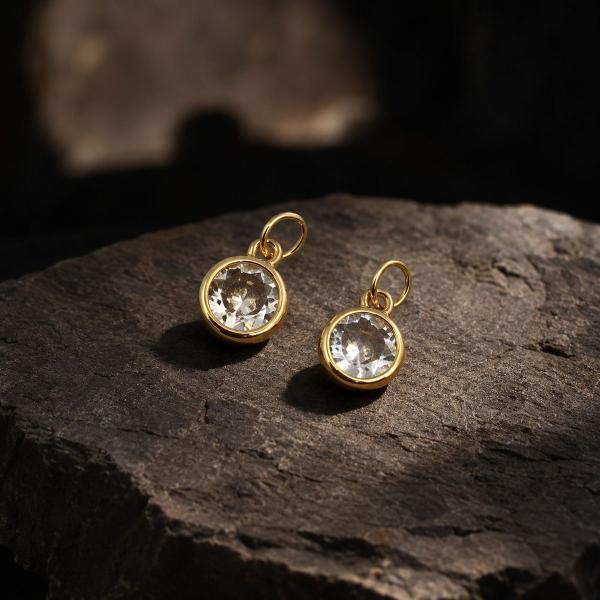
A small copper disc set with zircon, and because the disc is small the pattern is simple. A round disc does not care about orientation and looks right however it turns, but the drawback is that it has no front or back, so all the difference in workmanship lands on the edge. A chamfered edge feels smooth; one left square scratches the hand and the cord. The light on a small disc comes from the stone, and the copper face is only a ground, so do not expect it to shine on its own. As for thickness, thin feels flimsy and thick swings hard against the hand.
Position matters. Next to the buddha head it sits near the center of gravity and stays steady; at the disciple-bead end it swings hard, which suits a light piece. Two side charms on one strand are enough; from three up the balance of the strand is gone. A side charm is not a counter: a counter is for counting, a side charm is for looking at. Which wrist comes down to habit, and the dominant side swings harder.
Copper color follows sweat, and in summer two or three months will show the change. When it darkens, go over it with a silver polishing cloth rather than abrasive paper. Zircon dislikes heat, so do not point a hairdryer at it and do not put it in an ultrasonic bath, since vibration loosens the setting over time. When you restring, take the side charm off first; if the cord runs through the ring at the wrong angle the ring wears a notch. Copper edges only stop catching clothing once they are rounded, so feel around the piece when it arrives.