


Menu
By theme
By theme


{{ variable.name }} : {{ variable.values[selectedVariantsIndex[variable_index]].name }}
Quantity:
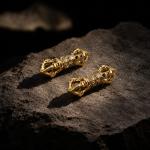
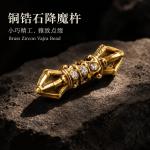
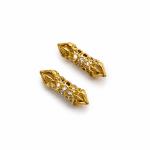
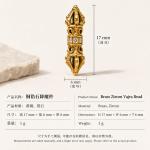
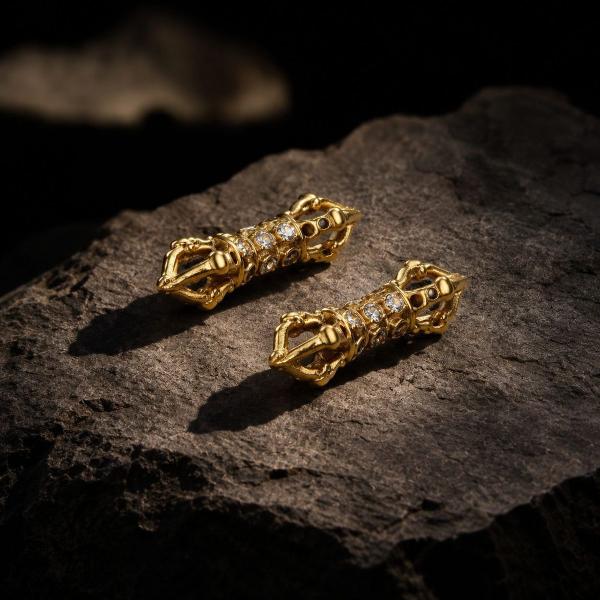
A vajra is a ritual implement meant for the hand, with prongs at both ends and a waist in the middle for the grip. Carried over into jewelry, once the size shrinks, the number of prongs becomes the way to tell one from another: three, five, nine, and the more prongs the busier the piece. This one is openwork, with the body pierced through so light passes. The waist is there to be gripped, and as a bead that waist falls exactly between two neighbors. The tips of the prongs taper to points, and whether those points are blunt or sharp tells you at a glance how new the mold is.
Openwork is one of the more laborious branches of casting. A core stays in the mold, the copper runs around it, and the core is dug out once the metal is cold. The edges of the openings are where trouble shows: uneven flow leaves shrinkage pits at the rim, and too much force in clearing the core snaps a thin prong. Whether the piece is any good comes down to whether those edges are clean. Openwork has to be cast in one go, and repair welds show most plainly at the rim of an opening. The openings should be even in size; one large and one small and the light comes through in patches.
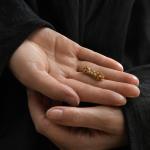
The body is set with zircon in the spaces between the prongs. The stones are small and the settings are small, so the prongs have to be pressed accurately, and a little off and the stone sits crooked. An openwork piece is lighter than a solid one and does not drag at the hand, at the cost of not taking pressure: sit on it and the prongs bend. Zircon colors work with the dark tone of the copper, and clear is the safest while the colored ones are particular. The hole in a bead like this is usually a little smaller than the main beads, so choose a cord one size thinner.
As a bead it works in the middle of a strand or at the end. A vajra is a ritual object, and if it is placed too casually someone who knows will say so. Under the buddha head as a pendant, or in the back-plate position, are both safe. Match hole size to cord size: the walls are thin on an openwork piece and forcing a thick cord will crack it. On a plain strand, adding one vajra gives it weight; on a strand that is already busy, adding one makes it cluttered.
Cleaning is more trouble than with a solid piece. Dust in the openings has to be drawn out with a soft brush, little by little, and do not rinse it under a tap, because water goes in and does not come out and the copper greens inside. Store it in its own small bag when it is not worn and do not crowd it against other beads, since the tips of the prongs bend easily against a neighbor. Whether the point faces up or down has rules in the old manuals; decide for yourself and do not let anyone lay it down too firmly. Once verdigris starts it cannot be wiped off, only scraped, and scraping leaves a pit, so do not give it the chance to start.