


Menu
By theme
By theme




{{ variable.name }} : {{ variable.values[selectedVariantsIndex[variable_index]].name }}
Quantity:
The four corners are what set a square spacer apart from a round one. A round bead looks the same from any angle; a square one has a front and a side, and the turn shows in a strand. Eased corners feel round, while corners left sharp catch cord and hand alike. If the sides are too straight the piece looks hard, and a slight curve is better. The four faces should be the same width, since a difference shows as a lean.
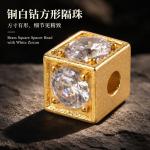
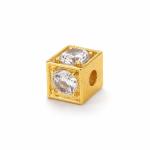
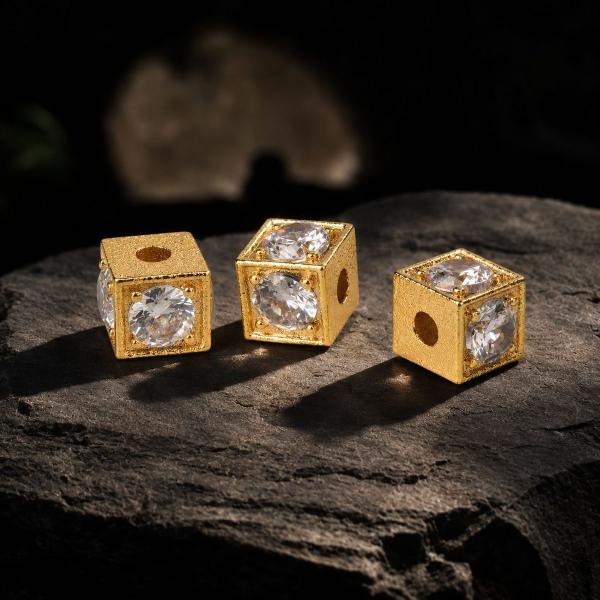
Copper base with zircon, one stone on the face or one at each corner depending on the version. The face is flat, so the setting is easy to cut and the prongs easy to press, less work than a curved surface. The drawback is that a flat face gives the light few angles, and when the stone does not catch it the stone looks dark, so the copper has to carry it. Polish the copper bright and a square bead keeps some life even in shadow. Cut the setting shallow and the stone sits secure and does not tilt when knocked.
Alternating square and round gives the clearest rhythm. Two round with a square between makes the square a node; square after square makes the whole strand read square, which suits a harder look. Match hole size to cord size, because the walls of a square bead are thinner than a round one and too tight a cord will crack it. Drill it centered and it strings true; off by one position and the strand leans. Turn the finished strand and look: if the four corners do not line up, the holes were drilled off center.
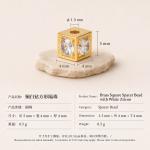
There is a trap in the sizing. The diagonal of a square is longer than its side, so at the same nominal figure a square bead looks bigger than a round one. Judge by the diagonal when you are matching, not by the side, or it will stand out on the strand with neither neighbor able to hold it. Ask for the side and the diagonal before buying, since a seller can usually measure both. Ask about thickness as well; too thick and it pushes the beads on either side apart. A thickness one size out changes how tight the whole strand strings.
The four corners take knocks, and a knock leaves a white spot that does not wipe off. Store it on its own and do not mix it with hard beads, because it will chip their holes as well. Wipe dull copper with a dry cloth; fingerprints show most on the flat faces, so a wipe before wearing is enough. Do not wear a square bead on the side against the wrist, where four corners press into the skin and leave marks in time. Polish all four faces bright and there is so much reflection that the shape stops reading.