


Menu
By theme
By theme





{{ variable.name }} : {{ variable.values[selectedVariantsIndex[variable_index]].name }}
Quantity:
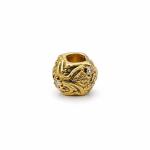
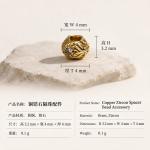
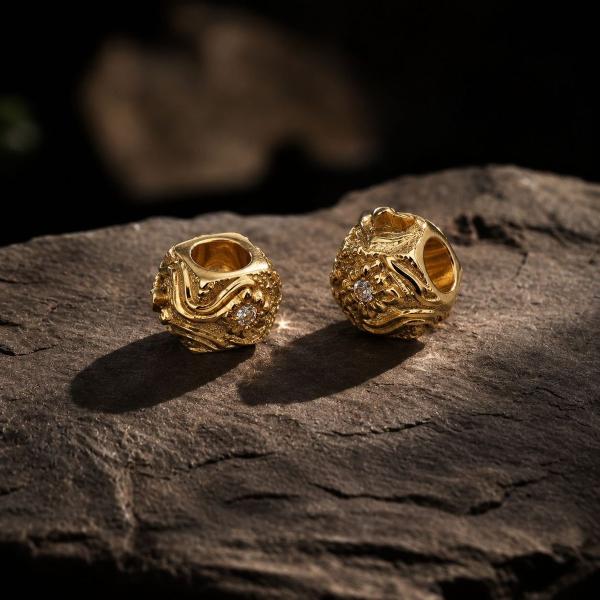
Relief means raising a pattern off a flat surface. A spacer has little area, so the relief cannot stand high: high relief presses into the hand and knocks off easily. A shallow lift that separates layers through highlight and shadow is the usual approach on small pieces. Low relief does not look busy, but it is comfortable on the hand and does not fight the beads around it. The trade calls this height the raise, and half a point of difference changes the feel.
The patterns are mostly scrolling vine, key fret or cloud scroll, running around the body. A pattern that circles is hardest at the seam: the start and the end have to meet at the same point, and if they do not there is a step, and you see it every time the bead turns. When choosing, turn the bead all the way around and look for that seam. Finding one is no reason to put it down; with handwork a little of that is normal. The corners of a key fret should be square and the vine lines round, and the two are cut differently.
The zircon sits in the gaps of the pattern, or in the heart of a flower. The stone and the relief have to be level; a stone standing high catches thread and one sunk low disappears. The dark copper sets off the stone, and under light the pattern and the stone come alive together. If the stone is clear you can see the copper underneath, and that warmth comes up through the setting. Press the prongs deep and no light gets in and the stone dies; press them shallow and it catches thread. Under a clear stone it is best to leave a bright surface.
This kind of bead works at the center of a strand as the main accent. The pattern is dense, so several of them make the strand busy; paired with plain beads, one busy and one plain, it is safest. Paired with beads that also carry a pattern, check whether the patterns belong to the same family, because vine next to key fret is two conversations. Two patterned beads per strand at most, since more tires the eye. On a plain strand one relief bead lifts the whole thing.
The hollows of relief hold dust, and once the copper darkens the hollows go black first, which makes the pattern clearer. Clean with a soft brush along the pattern rather than across it, because brushing across rounds the raised edges and the pattern collapses. Do not use an ultrasonic bath; it loosens the setting and the stone falls out. Take it off before washing clothes or showering, since soap gets into the hollows and dries as white spots. Once the hollows of copper have gone black, do not try to polish them white again, because polishing them white flattens the pattern.