


Menu
By theme
By theme




{{ variable.name }} : {{ variable.values[selectedVariantsIndex[variable_index]].name }}
Quantity:
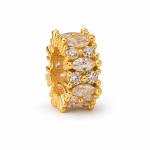
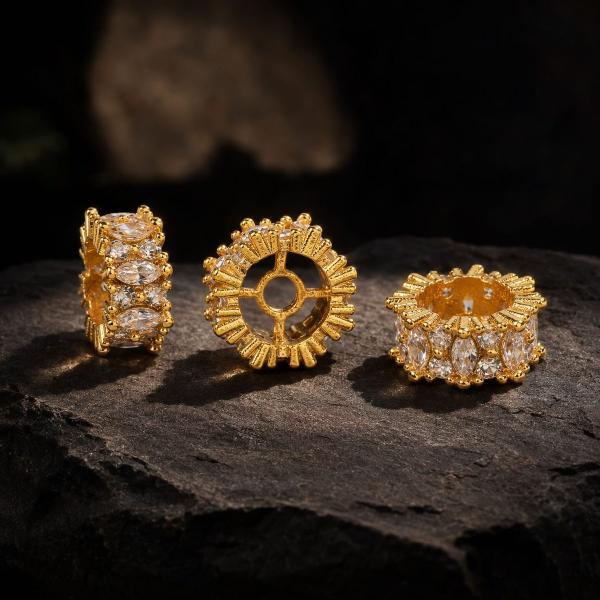
The tire bead takes its name from the shape: a ring with one or more grooves around the outside, like tread. The advantage is volume, since set between round beads it does not get squeezed flat and hidden the way a thin disc does. Wider, it opens the gaps along the strand, so the beads stop crowding and the cord does not turn a hard corner at the hole. Tire beads are also called drum beads or ring beads, and the name changes from place to place. A width one size out changes how tight the whole strand strings.
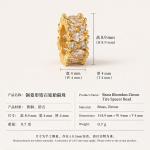
A brass base with zircon set into one diamond-shaped face. The outer ring is curved and the diamond is flat, so two forms on one piece give it something to look at as it turns. The grooves have to be even in depth; one deep and one shallow and the light breaks along them. If the edge of a groove is too sharp it feels like a blade, which means the mold was never finished. The pattern on the outer ring runs straight or on the diagonal, and with a diamond stone set in, the direction changes with it. Groove spacing should be even too; close together reads fussy, far apart reads empty.
The grooves hold dust, and that is the trouble with this piece. Once the copper darkens the bottoms of the grooves go black first and the pattern actually reads more clearly, and some people like that. Clean by turning a soft brush in the grooves, not with a needle, because a needle point leaves a white scratch in the bottom that does not come out. When the dust is thick, dampen the brush with warm water rather than soaking the whole bead. If cord wax is stuck in a groove, soften it in warm water and then brush; do not dig at it.
As a spacer the tire is wider than an ordinary disc and takes up more room. Two on a strand give enough rhythm; more and the strand looks coarse. Match hole size to cord size: the walls of a tire are thick and take some strain, but a burr at the hole still has to be pushed out first. With a thick cord, twist the end to a point first so it does not split at the hole. Put a round bead between two tires and the strand stops looking stiff.
Brass oxidizes slowly, but sweat trapped in the grooves does not dry, and in time it raises spots of green. When you see them, wipe with a dry cloth rather than rinsing, because water carries the green elsewhere. Bag it separately when it is not worn; the outer ring stands proud and, crowded against other beads, it chips their holes. The green on brass is verdigris, it washes off the skin, and there is no need to panic. Use a bag with a zip, since the opening is wide and the piece comes out easily.