


Menu
By theme
By theme







{{ variable.name }} : {{ variable.values[selectedVariantsIndex[variable_index]].name }}
Quantity:
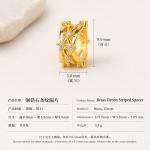
In a strand a spacer disc is as thin as a coin, and without it the main beads gnaw at one another wherever they touch. This matters most when a single strand mixes materials of very different hardness — South Red agate sitting next to wood, say, where after enough months the softer of the two wears a small flat facet and never quite recovers its shape. This disc is a copper base set with zircon, the face worked into a close ring of fine ridges that light up section by section as the piece turns, like the glint running along fine teeth.
It usually sits between two groups of main beads, there to separate materials and to leave the strand a little air. The ridges run around the circumference, so however the disc turns the lines stay horizontal; you never get vertical stripes failing to line up with their neighbors. That saves real trouble when stringing a long strand, because you don't have to register the pattern on every single piece as you go.
One point gets overlooked when choosing: diameter. A size down from the main bead and it reads as a shim, doing its job without being noticed. The same size and it competes with the star of the strand; much smaller and the whole line sags visually, as though a section had been pinched out. Know the diameter of your main beads before you buy, or simply buy the disc together with them and skip the trial and error at the bench.
Copper oxidizes; zircon does not. Worn long enough, the copper rim goes dark while the stone stays bright, and the contrast is genuinely good-looking — part of what makes this kind of material interesting in the first place. Clean with a soft cloth rather than a stiff brush poked into the grooves. If dust does collect between the ridges, rinse with warm water and dry it off before putting the strand away.
When stringing, check the hole edges for burrs. If you find any, run fine sandpaper over them first. A burr saws through cord a fiber at a time, and a break halfway along a strand is the most annoying kind to repair, since everything on both sides has to come off.
If a whole strand is one material from one workshop, you can leave the disc out and lose nothing. But the moment you mix materials, or the main beads have holes without a chamfer, one disc earns its place. It is cheap, it stays out of sight between two larger beads, and it can add a good deal of life to the strand it sits in.
One more thing is easily missed. Over time the disc polishes a faint ring into the side of the main bead, which is normal contact wear and no cause for alarm. Not stringing too tight cuts it down, and don't cram the storage box either — pressure in storage leaves marks the same way that friction does.