


Menu
By theme
By theme






{{ variable.name }} : {{ variable.values[selectedVariantsIndex[variable_index]].name }}
Quantity:
The name says only "metal" and doesn't say which metal. That has to come first: without knowing whether it is copper, an alloy, or a plated base, there is no way to judge whether it will oxidize or tolerate water, or how the surface will age under daily wear. Ask before you order. Don't assume on its behalf, and don't default to copper just because the price is low.
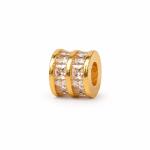
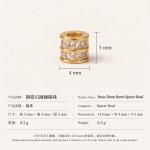
The shape is a round barrel spacer, walls parallel, a ring of zircon set into the surface. The barrel's advantage is stability: it won't turn on the strand, and the stone-set face stays outward where the pattern belongs. The drawback is the flat ends. Against round main beads a small gap remains at the joint and the fit doesn't look perfectly flush; that comes from the shape, not from the workmanship.
This kind of spacer is usually used in pairs, bracketing a section of main beads. A single one also works, set between a pendant and the main strand as a transition. Hole diameter is the measurement to confirm: too small and the cord won't pass through twice, too large and the bead slides on the cord until the hole wears into a flare.
With the material unknown, keep the care as conservative as possible: don't shower in it, keep it away from perfume and pool water, wipe it with a dry cloth after sweating. If it is plated, the areas that rub will show base metal in time; if it is copper, it will darken from the edges. Neither is a quality problem — it is the nature of the material, and both are easier to live with once you know which one you have.
Before stringing, count the sizes of the main beads you have. The spacer should run one to two millimeters smaller in diameter, and then the line of the strand flows instead of stepping in and out at every joint.
If the hole turns out small when the piece arrives, don't force it. Forcing flattens the cord inside the hole and the load goes uneven, and that is the bead where a break happens. A cord one size finer, or a bead with a larger hole, is the steadier answer.
Asking about the material before buying is the cheapest habit there is. Two spacers that look the same, but copper and alloy differ in feel, in weight, in how fast they oxidize, and in price by a fair margin. One question is better than guessing after delivery.
You don't need many spacers. Past four in a strand, the whole thing starts to look like an exhibition of fittings and the main beads lose their place. Two or three is the steadiest proportion, and it leaves room to change the arrangement later without rebuilding from scratch.