


Menu
By theme
By theme

{{ variable.name }} : {{ variable.values[selectedVariantsIndex[variable_index]].name }}
Quantity:
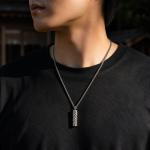
Gau is a Tibetan word, taken into English as it stands, for a small portable shrine. The body is hollow with a lid that opens, and inside go an image, a page of scripture, a relic or some other holy object; it is worn inside the upper garment and travels with its owner. It is not simply an ornament — it is closer to a small room you can carry about with you. The form varies from region to region, round in some places and square in others, but they all open and all hang. Some people wear one as a pendant; others hang it in a car. There is more than one way to use it.
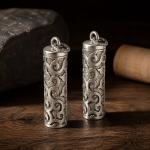
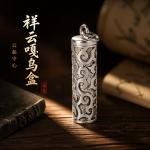
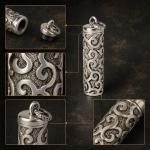
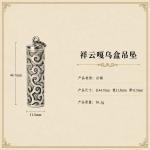
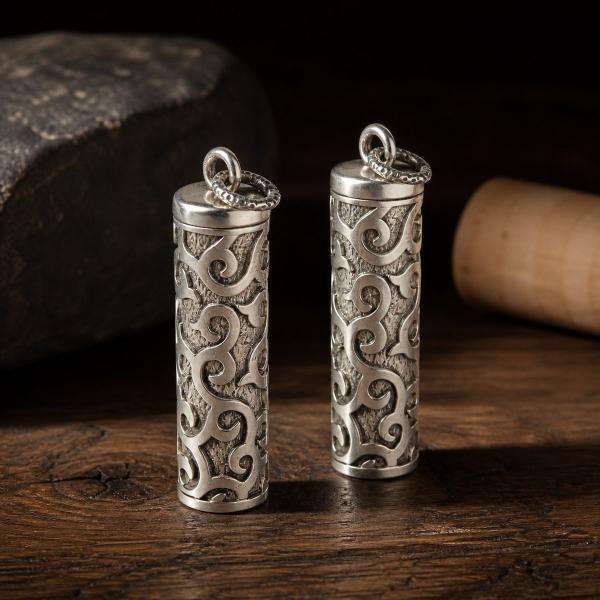
This one is made at pendant size, with a flattened round body and a band of auspicious cloud around the rim; the lid closes down to a single fine seam. The hanging ring at the top is cast in one piece with the body, which is stronger under load than a ring soldered on afterwards. It closes by friction at the rim of the lid, with no spring, and will loosen a little with years of use. Shut, the seam is barely visible, and that is one of the places where you judge the work.
Auspicious cloud is a Han motif, developed from the cloud-vapour patterns of the pre-Qin period and fixed in the Ming and Qing into ruyi-shaped heads joined to trailing tails. Putting it on a gau box joins two traditions: the form comes from Tibet, the pattern from Han China. That kind of mixing is everywhere in jewellery now and does not need to be forced into a single ritual explanation. The clouds are usually set in groups of three, one large and two small, and this piece follows that arrangement.
White copper is silver-white in tone, with the cloud ridges polished and the hollows left dark, so at a distance it reads as a shallow relief. The walls are not thick, and the sides should not be squeezed. A raised ridge inside the lid gives a soft click when it closes. If the body were made too thin it would dent under a thumb, so press lightly with a fingertip when choosing. The seam at the rim should be as fine as possible; a wide one lets dust in.
What goes inside is your own business — a slip of paper, a grain of rice, a length of thread will all do, and nothing valuable is required. Take it off before bathing or swimming; water that gets inside dries very slowly. In long storage leave the lid a fraction open, so that the seal and the metal do not stick together. Line the cavity with a scrap of soft cloth before putting anything in, or a hard object against the copper will rattle as you walk. Do not leave the lid standing open for weeks on end; once dust settles, it will not close flush again.