


Menu
By theme
By theme






{{ variable.name }} : {{ variable.values[selectedVariantsIndex[variable_index]].name }}
Quantity:
One eye, two eyes, three, up to nine, and beyond those lotus, treasure vase, tiger tooth, line bead — the dZi repertoire has a nomenclature all of its own. The more eyes, the denser the pattern and the harder it is to cut. Each name carries its own account, long current in Tibet, but the market uses them loosely: the same pattern may be called different things by two different sellers. There is no need to agonise over the names at all; whether the pattern pleases your eye is the more reliable test.
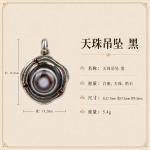
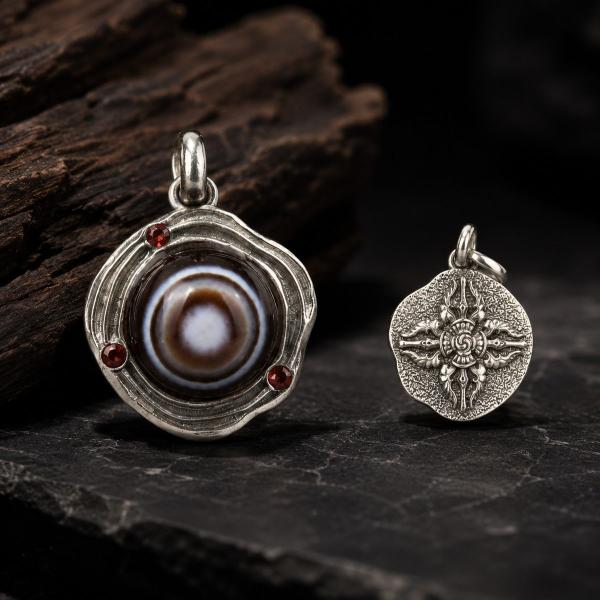
This pendant takes the eye motif, with the ground in either black or red. The eye is a circle set inside a ring, with a final line closing it on the outside; it sits a little above the centre of the plaque, and an arc runs down each side. The black ground gives the strongest contrast, so the white of the eye stands out; the red is warmer and the lines sit more softly.
The base is white copper, with the pattern drawn in raised lines and the hollows darkened to make a shallow relief. White copper is cool, so the contrast is sharpest on black and gentler on red. The surface has a matt finish, which scatters the light instead of letting it glare back at you like a mirror. If the dark is wiped out of the hollows the pattern falls apart and all that is left is a piece of copper. A fine raised line runs round the edge, and a fingertip finds a shallow step there.
The pendant is round in outline and hangs below the collarbone, which works with a crew neck or a V neck. A black or dark brown cord is steadiest; a pale cord makes the whole piece look weightless. The dZi motif means protection, but the wearer need not make anything of that — liking the pattern is reason enough. If your neck is slender, shorten the cord so the pendant does not slide down inside your clothing. The motif is common in jewellery today, and it is better understood as a graphic tradition than as a charm with a fixed job.
Wipe sweat off white copper, especially from the hollows on the back, where it collects and turns the metal grey. Do not put it in an ultrasonic cleaner; the vibration is unkind to thin relief. For long storage, wrap it in soft paper rather than crowding it against hard objects in a drawer. Brush dust out of the hollows with a soft brush, following the direction of the lines; brushing across them only pushes the dust deeper. Copper does not need oil at all, since oil attracts dust and makes matters worse.