


Menu
By theme
By theme

{{ variable.name }} : {{ variable.values[selectedVariantsIndex[variable_index]].name }}
Quantity:
The vajra comes into Chinese from the Sanskrit vajra, which means both thunderbolt and diamond, and takes from them the sense of something indestructible. Its form is fixed: a long central prong, prongs opening at either end, and a lotus seat beneath them. A single vajra is one line; the crossed vajra is two of them set at right angles into a three-dimensional cross, so that from any of the four sides it reads as a vajra. The frame travelled from India into Tibet and hardly changed on the way; only material and size did. The vajra in an old thangka and the one in a shop today share the same structure.
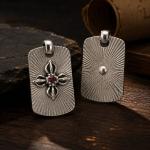
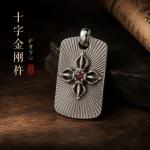
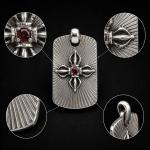
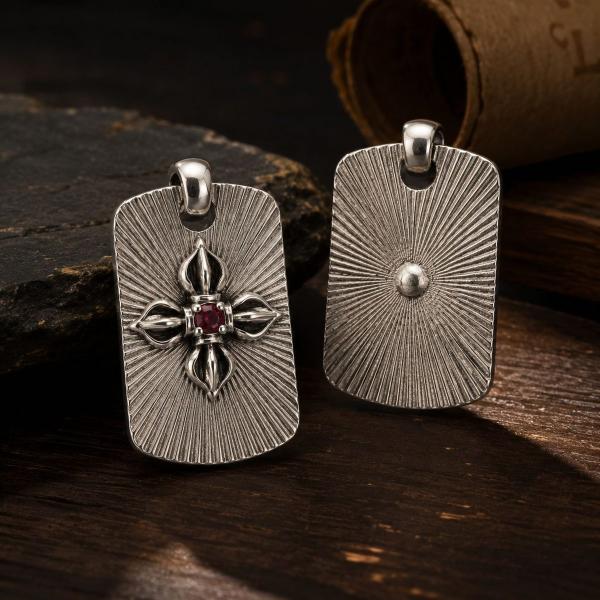
In Tibetan practice the crossed vajra is also called the karma vajra, karma here meaning activity: complete on all four sides, it stands for something that reaches everywhere. It is often carved on temple thresholds and on the corners of ritual implements, more as ornament than as the main subject, which is why the crossed vajras you meet on old pieces are usually no bigger than a palm. Made into a pendant, the main thing is that it should not become a thick disc. This one steps back on all four faces, so light coming from the side shows two layers, front and back, and the face does not blur into a single flower.
White copper is silvery and gives a cold light; it holds up against Tibetan red or ink green. Do not use too fine a chain. The crossed vajra has corners on every face, and a fine chain's clasp will wear through against them. Look at the clasp as well: a spring ring is easy but works loose, an S-hook is secure but needs an extra turn when you put it on. Worn to chest length, the pendant has weight against the cloth and will not turn over. The chain can be altered: shortening is easy, lengthening needs a fitting, so buy it a little long.
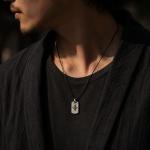
Whether it hangs outside the collar or inside depends on how much movement you want. Outside, it is there to be seen; inside, against the skin, the cold of the metal is noticeable at first and forgotten once it warms. With a high collar the pendant will push against the throat, so switch to a shorter chain and let it sit outside the collar with just a corner showing. In winter, with thick clothing, leave the chain long or the pendant disappears into the collar. A chain against the back of the neck itches when you sweat; choose leather or cotton cord.
In summer, with more sweat, rinse the crevices with clean water every few days and dry before putting it away. The crossed vajra has many recesses where moisture sits and does not easily leave; do not wear it in the bath. Take it off to sleep as well. Lying on your side it digs in, and no one looks after jewellery in their sleep; damage is always found on waking. Black in the recesses of copper is not dirt but an oxide layer; wipe it away and it grows back, so do not fight it.