


Menu
By theme
By theme


{{ variable.name }} : {{ variable.values[selectedVariantsIndex[variable_index]].name }}
Quantity:
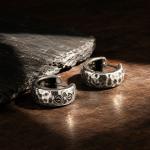
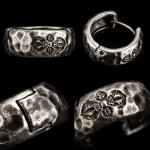
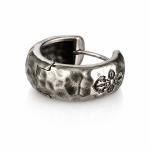
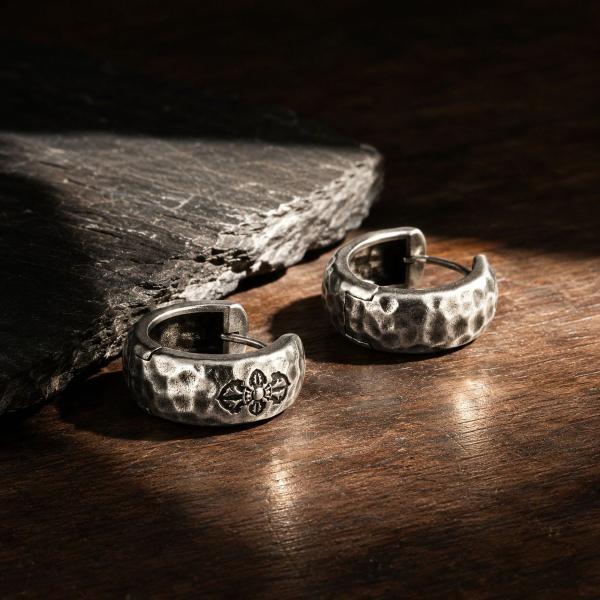
Hammer texture is struck, not stamped. A small hammer falls on the metal again and again, each blow a little different in depth, and the surface ends up covered in tiny dents that break the light into many pieces instead of the single sheet of reflection a polish gives. No two patterns are alike; the weight of the hammer and the spacing of the blows live entirely in the hand. Part of what you pay for a hammered piece is those hours of striking. Depth also depends on how soft the metal is: softer brass takes the hammer and the dents come out round.
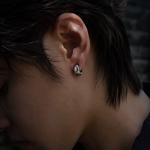
Shrinking the four heads of a crossed vajra to the size of an earring and still keeping them legible is not easy. The hammering helps: the undulation itself sharpens the outline, dark in the hollows and bright on the ridges, and the eye completes the form without every edge being cut hard. The gaps between the prongs are not filled in either; light passes through, and worn at the side of the ear a little of it leaks in from behind. The two ends of the vajra sit at the lower edge of the lobe and the middle lies against the curve of the ear, so the piece reads horizontally rather than vertically.
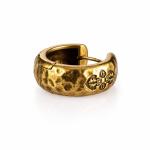
Two colours, white and yellow. The white is cold, like old silver; the yellow is warm, close to old copper. On the same person, the white flatters the skin and the yellow flatters the hair. Neither is a bright finish, so neither draws attention day to day: both are steadiest with plain clothing, and against a patterned shirt the pattern tends to swallow them. The white pair is finely ground and more matte; the yellow keeps a little rough surface, so its reflections break up more.
The weight of the earring sits in the body of the vajra, and on a thin lobe it will feel as though it is pulling down after a while; change to a slightly tighter pair of backs, and avoid the thin silicone ones, which will not hold. If the piercing is new, do not start with a piece this heavy; wait until it has settled. Choose silicone backs that grip, since metal ones slide. A single earring is hard to replace, so keep the pair together when you put them away.
Dust collects in the hammered hollows. Rinse them when you wash your face and go over them with a soft brush. Do not use an ultrasonic cleaner: after vibration the shine inside the dents goes patchy and that broken brightness is gone. Store them separately rather than heaped in a box with other earrings knocking against them; brass is softer than gold and every knock leaves a mark. Over years the hammering is flattened a little by the skin, the raised parts brightening first, and that is how the piece becomes an old object.