


Menu
By theme
By theme

{{ variable.name }} : {{ variable.values[selectedVariantsIndex[variable_index]].name }}
Quantity:
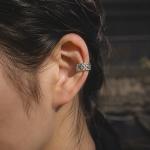
For anyone who wants to wear something without a pierced ear, an ear cuff is the answer. It grips the cartilage on the outer ear by the spring of the metal, sits higher than the lobe, and moves as you walk. The grip has to go where the helix curves; on a flat section it will not stand and comes off within a few steps. On a thin ear, move the grip a little higher, where the cartilage is thicker. The first time you wear one it feels as though something is there; half an hour later you forget it. Ear cuffs have been common in Japan and Korea for a decade and more, and the way of wearing them is much the same.
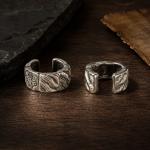
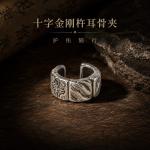
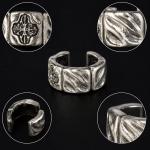
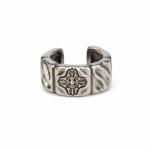
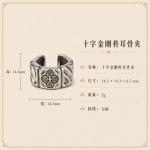
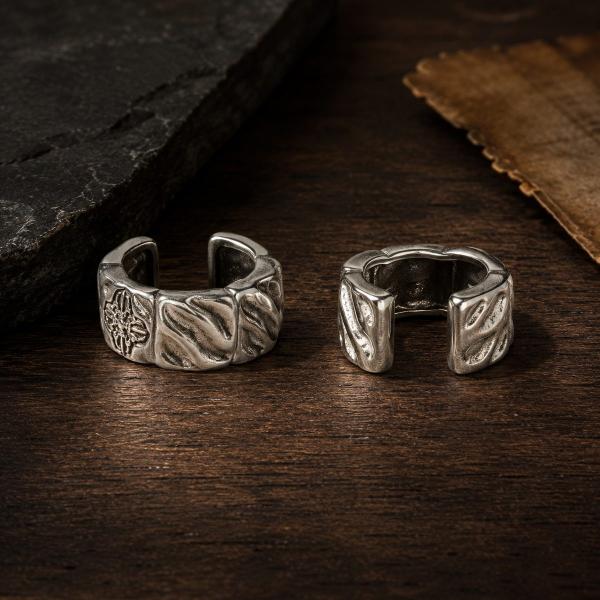
Shrunk to something that can grip an ear, the crossed vajra can keep only its outline: the four faces pressed into one thin plate, the relief of the prongs set by the depth of the pressing. Truly three-dimensional versions exist, but they are heavy, and cartilage will not carry them. So with a piece like this the first consideration is lightness and the second is fineness. The heads here are rounded off, so nothing scrapes the skin behind the ear. The join between vajra and cuff is narrowed, so that the vajra appears to float on the ear.
The tightness can be adjusted: open the gap a little and it loosens, close it and it tightens. Set it so that it holds without pinching; too tight and the cartilage aches and you want it off within half a day. On a first try, wear it for five minutes, and if it feels swollen, ease it off half a turn. Metal is cold in winter, so warm it in your hand first. Take it off before exercise; once you sweat, the grip slides. The position differs from ear to ear, so find it on your own helix, not by copying someone else's photograph.
The yellow of brass is on the dark side, less conspicuous than gold, and it looks especially good against black hair: that small patch of warmth at the side of the ear is only visible when you move. With a high collar the cuff is hidden by the collar, so wear it higher on the helix. Wearing both looks complete; a single one on one side, with the other left bare, has more restraint. The design is neither for men nor for women, only for a particular ear shape. Where the upper helix is narrow, keep that side looser, or pressure on the blood vessels will make it numb.
When you take it off, put it in a fixed place; small pieces like this are the easiest to lose. Brass dulls with sweat and darkens with it; a soft cloth is enough, and do not scrub it with toothpaste, whose grit will scratch the surface. If the grip loosens, press it inward with your fingers, not with pliers. Be careful washing your hair, since a towel will catch it. Keep it in a small felt pouch rather than heaped with rings. Wear it a summer before you polish it; the colour is better than new.