


Menu
By theme
By theme


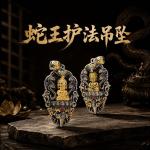


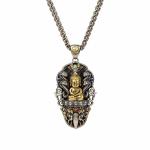
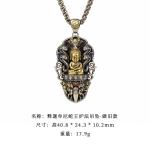
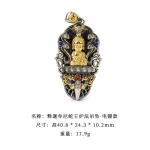
{{ variable.name }} : {{ variable.values[selectedVariantsIndex[variable_index]].name }}
Quantity:
In the Buddhist scheme the serpent king answers to Mahoraga, one of the eight classes of dharmapalas, and his original form is the great python god. In Indian tradition the naga are dwellers in water and under the earth, living in springs and among roots, and Buddhism took them into the ranks of the protectors. The eight classes are eight kinds of being: devas, nagas, yakshas, gandharvas, asuras, garudas, kinnaras and mahoragas. Within the eight, dragons and serpents are often spoken of together, because the naga is both serpent and dragon, and Chinese translators used both words.
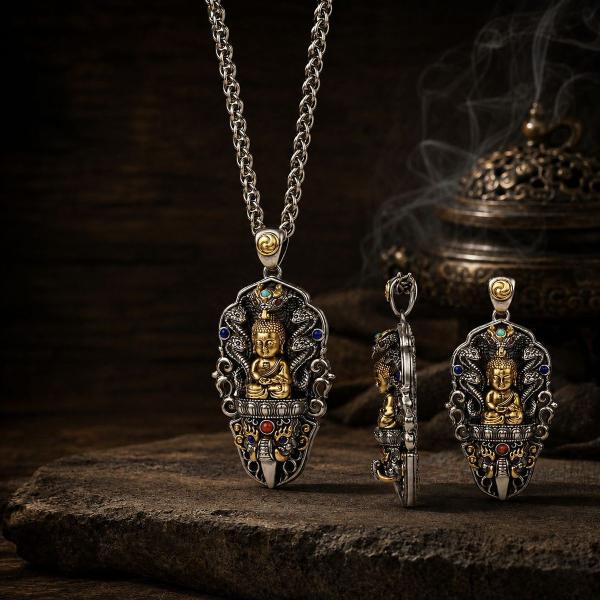
A coiled serpent body is hard to do in metal: coil it tight and it becomes a knot, coil it loose and it falls apart. This piece takes the standing attitude, the body raised upright, the head at the back, the neck spread at the sides like a shield. The posture is common in Southeast Asian sculpture and rare in Han China. The spread at the neck is the serpent's skin fold, not a wing, and it is easy to mistake in the making. The head faces the back, so that worn against the chest what others see is the rise and fall of the body.
The plated version has a bright surface with a single sheet of reflection, so the scales read by shape rather than by light and shade; the antiqued version has black pressed into the seams, so the scales lift one by one and the piece looks heavier from a distance. The difference between them shows most in the light and does not photograph. The brightness of plating is the brightness of new, the weight of the antique is the weight of old. It depends which you want. For younger wearers the plated is the usual choice; for elders, the antiqued. Each scale overlaps the next and narrows from tail to head.
On a white copper base, the plating wears at the corners first with long use, showing the copper beneath; that is common to plating and not a flaw. The antiqued colour is pressed deep, so a knock shows the ground beneath more plainly, and is worth watching for. Neither version should be soaked: plating dislikes the salt in sweat, and the antiqued surface dislikes rubbing. Do not use a silver cloth on the plated one, since the powder in the cloth will wear the plating away. The antiqued can be polished and grows brighter, with the dark left in the recesses.
Take it off for the bath. The antiqued surface has been treated, so anyone with sensitive skin should tape it to the inside of the wrist for a night first and wear it only if nothing happens. The subject is a heavy one, and it sits better inside the shirt than outside. A black cord is steadiest; the serpent's form is heavy already and a silver chain cannot hold it. Store it in its own bag, because the points at the neck will scratch other pieces.