


Menu
By theme
By theme




{{ variable.name }} : {{ variable.values[selectedVariantsIndex[variable_index]].name }}
Quantity:
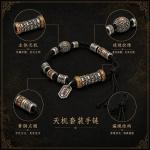
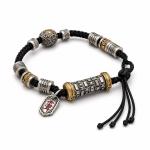
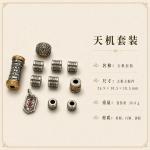
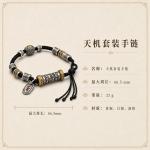
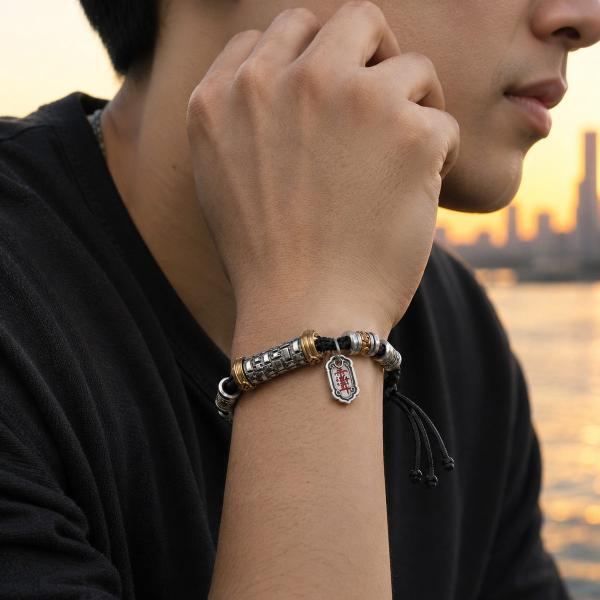
The set is sold two ways: as a bracelet already made up, ready to wear, or as spacer beads alone, to string into a strand of your own. Tianji is the name of the series, and the pattern takes the totem route: linear, geometric, not carved after any particular animal. Most totem patterns work this way, abstracting the specific form and keeping only the frame. How far to abstract is a question of the density of the lines; too sparse and it is empty, too dense and it is stifling. There is no need to look deeply into the name. It sounds well, which is better than a coined word.
The advantage of a totem pattern is that it goes with anything. It carries no fixed story, so it does not quarrel with other subjects: beside Buddhist beads it does not compete, and among plain silver beads it does not collapse. Patterns of this kind are much used in Western silver jewellery, and on a Chinese-style strand they look new. Going with anything has its price, though: it is not the sort of thing anyone remembers at a glance. What it offers is lasting interest rather than a jolt.
A spacer bead's job is punctuation. A strand of one material goes flat with wear; add a piece of another kind every few beads, and the eye has somewhere to land and the whole strand comes alive. Spacers should not be many: three or five is enough, and more than that fragments the strand. Position matters as well. Set symmetrically, it looks formal; set off to one side, casual. It depends which you want. The channel must be true; off by a little and the whole strand sits crooked, which shows most while you are stringing.
White copper makes a better spacer than brass: paler, so it does not bear down on the beads, and stiffer than silver, so it does not distort when strung with stone. Hardness is a practical matter on a strand; a soft spacer rounds off in a year. Another advantage of white copper is that it does not need frequent polishing, and a little dullness sets off the beads. When copper and stone are strung together, a thin leather washer between them saves them rubbing. If you buy the spacer version, change the cord as well; the old one may not be the right thickness.
The set is sent with the number of pieces listed on the page for that version; do not add pieces of your own, since channels that do not match will not string. The bracelet version uses elastic, which loosens with wear and should be replaced once a year. The spacer version has no cord, so measure the diameter of the cord in your own strand before buying. Neither should be worn in the bath: copper dislikes soap and cord dislikes hot water. The pattern here is fine, and dust settles in the seams with use; a dry soft brush is enough.