


Menu
By theme
By theme




{{ variable.name }} : {{ variable.values[selectedVariantsIndex[variable_index]].name }}
Quantity:
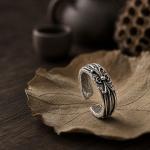
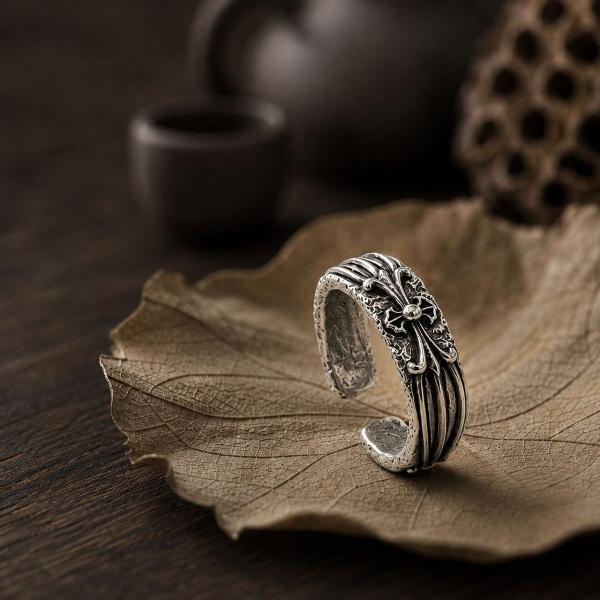
A vajra reads in three parts: the central prong, the lotus seats at either end, and the prongs that open beyond the seats. The central prong is the body and must be straight. The number of prongs varies, five or nine, and the more there are the more work there is. This one takes the common three prongs, simplified, which suits a face as narrow as a ring's. Simplification is not licence: the gaps between the prongs must be even, and only then does it stand. One gap wider than another is visible at once, more so than a badly cut line. The three-pronged vajra is the commonest in Tibet; five-pronged ones are mostly on larger implements.
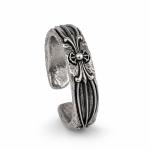
On a ring the vajra runs sideways, the central prong bent into an arc along the circumference and the lotus seats at the sides of the finger. In the bending the central prong must not ridge; a ridge breaks it. The order is to bend first and then refine, working the inner curve and leaving the outer as it was. The lotus seats at the sides take the pressure, and they are the first places to brighten with wear. After bending it must be annealed; unannealed, the bend stays hard, uncomfortable to wear and liable to crack.
The gap is left at one side of the vajra: open it to put the ring on, and only when closed is the shape complete. So it has to be aligned when worn, with the gap towards the palm, and from the front it reads as one continuous line. A little allowance is left at each end of the gap so that it will still close after being opened a few times. If it will not close, press the two ends gently towards each other, without forcing. The ends are rounded, so they do not scrape. Before wearing it the first time, try it for half a day at home to see whether it presses.
White copper is whiter than brass and darker than silver, between the two, and does not dictate what you wear. Against a dark sleeve the strip that shows is cold white; against pale clothing it looks warm. Measure the finger properly: the gap adjusts, but only so far, and more than two sizes out you should change to another model. Measure in the evening; fingers are thinner in the morning and the size comes out small. A copper ring in summer leaves a faint green line on the finger, which washes off and is not poisoning.
Worn against the skin, copper leaves a mark when you sweat; take it off at night and wipe it. Do not sand the inside of a ring: sanding thins the edges and makes it cut more, not less. As a gift, the vajra carries more meaning than a plain band, so give it to someone who holds with it, not at random. Do not wear two open rings on the same hand; they press on each other. The band is round and a finger is not, so there will be a little space at the sides. That is normal.