


Menu
By theme
By theme



{{ variable.name }} : {{ variable.values[selectedVariantsIndex[variable_index]].name }}
Quantity:
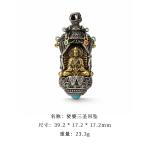
Saha is a transliteration of the Sanskrit saha, meaning endurance: the suffering of this world can be borne, and so it is called the world of endurance. The three sages of the Saha world usually means Shakyamuni Buddha with Guanyin and Ksitigarbha, one the teacher, one the embodiment of compassion, one of the great vow. The grouping is common in Han temples, set to one side of the main hall rather than centred in a row of three. Shakyamuni's teaching in this world, Guanyin's rescue of those who call, Ksitigarbha's vow not to attain Buddhahood until the hells are empty: three sentences, each with its own charge.
The grouping easily confused with it is the three sages of the Avatamsaka: Vairocana, Manjushri and Samantabhadra. The difference is in the pairing of one Buddha with two bodhisattvas, and the figure in the middle settles it. Shakyamuni in the middle with Guanyin and Ksitigarbha at the sides is the Saha world; Vairocana in the middle with Manjushri and Samantabhadra is the Avatamsaka. Asking before you buy is better than finding out at home that you have mistaken one for the other. There is also the arrangement of the three Buddhas of past, present and future, which is different again; do not mix them. In temples the two groups are often set side by side, and visitors go wrong.
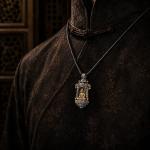
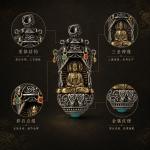
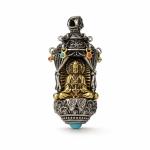
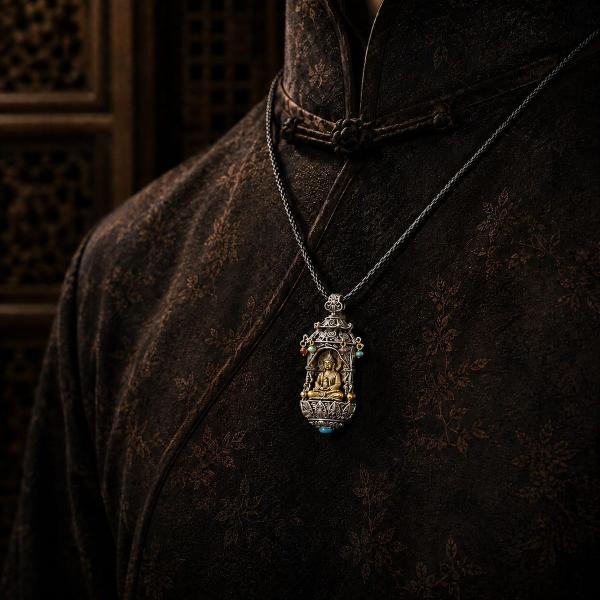
The shrine form is borrowed from the small niches cut into cave walls: a door-shaped outer frame with a recess behind it, as though one cell of the cliff face had been brought to the chest. The lintel of a niche usually carries a band of ornament, flame, lotus or string of beads; that is left off here, with a single border in its place. With it gone the outlines of the three figures read more clearly. The depth of the recess is only enough to let the three stand out; any deeper and the shadow is heavy and the faces go black. The mouth of the niche draws in slightly, so that light does not flatten the faces.
Three figures side by side on a face only so wide: the features can only be outlined, and the shape of the haloes has to separate the planes. The centre figure is a little taller and the two flanking ones a little lower, and that difference in height is the most basic order within a niche. Too much and it looks crowded, too little and there is no telling principal from attendant. The spacing between the three must be even; one gap wider and the group looks scattered.
White copper is unplated, and the recess of the niche darkens first, which serves as a background. Do not clean inside the niche with a toothbrush; wrap a cotton bud in a soft cloth. Worn at the chest, the niche faces out; do not wear it reversed. Quite a few people do wear it reversed, saying they would rather have the Buddha against the body; both ways exist, and it depends what you hold to. The rim of the niche is thin, so do not thread it directly on fine wire, which will cut a groove.