


Menu
By theme
By theme






{{ variable.name }} : {{ variable.values[selectedVariantsIndex[variable_index]].name }}
Quantity:
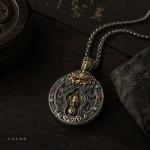
Openwork is the laborious way with metal: the background is cut away from stock that is not thick, leaving only lines and the joins between them. Cut too much and it breaks, too little and no light passes. So an openwork piece is judged on the margin between openness and strength. There is no formula for that margin; it comes down to how many pieces you have made. The metal must be tough, since brittle stock cracks as soon as it is cut. The cut-away must be even; leave more in one place and less in another and the bias shows as soon as light hits it. An openwork piece feels light in the hand and looks more complex than a solid one.
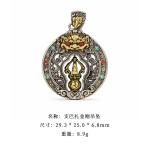
Zhibaza is a transliteration from Tibetan. Which protector it names varies from place to place, and I will not force an identification. Titles of this kind were passed on by word of mouth in Tibet to begin with, and the spellings are not consistent. If the name sounds well and the form holds, that is enough. If you really want the source, consult Tibetan-language material, which is more reliable than asking a seller. The three syllables sound like a line of mantra rather than a title.
A vajra form in openwork produces shadow. Worn over pale clothing, light passes through and a small patch of pattern falls on the chest, which a solid piece cannot give. It shows most in summer, in a single layer; in winter, under thick clothes, it is not visible. The shape of the shadow is reversed: a vajra from the front and a vajra cast on the body. A shadow against the body is softer than the pattern itself.
Openwork catches on thread, so avoid coarse knits and lace. If your hair is long, watch that strands do not wind into the openings as you take the piece on and off. One strand caught and pulled can bend a thin join. The fringe of a winter scarf catches as well, so glance in the mirror before going out. Take it off to wash your hair; wet hair tangles more readily. A knock against the corner of a desk is more likely than a drop to the floor.
White copper in openwork is more fragile than solid, and a fall will distort it. If it does distort, do not bend it back yourself: copper has a memory, and one bend leaves a mark. Store it between two pieces of soft cloth. Once distorted it no longer casts the shadow it did, and a little light blocks it out. A piece like this is not for every day; it suits being an accessory you change into now and then. Dry your hands after washing, since water left in the joins will raise green spots over time. When travelling, do not put it at the bottom of a suitcase; one night under pressure will distort it.