


Menu
By theme
By theme


{{ variable.name }} : {{ variable.values[selectedVariantsIndex[variable_index]].name }}
Quantity:
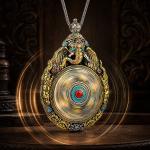
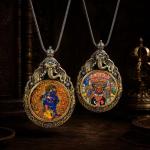
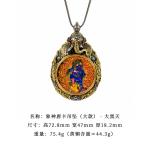
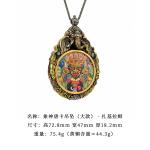
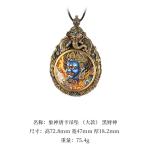
The title calls this a Ganesha thangka pendant, but the three options are not the same subject at all. Black Jambhala, Mahakala and Zhakila belong to different figures in Tibetan Buddhism, each with an iconographic system of its own. When you order, the option name is more reliable than the main title, so do not take the word Ganesha for granted. The three options are separate stock lines in the back office, and one wrong pick means a parcel going back and forth. The title is probably there for the search terms; what actually ships follows the option.
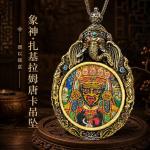
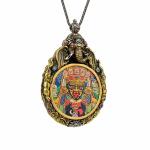
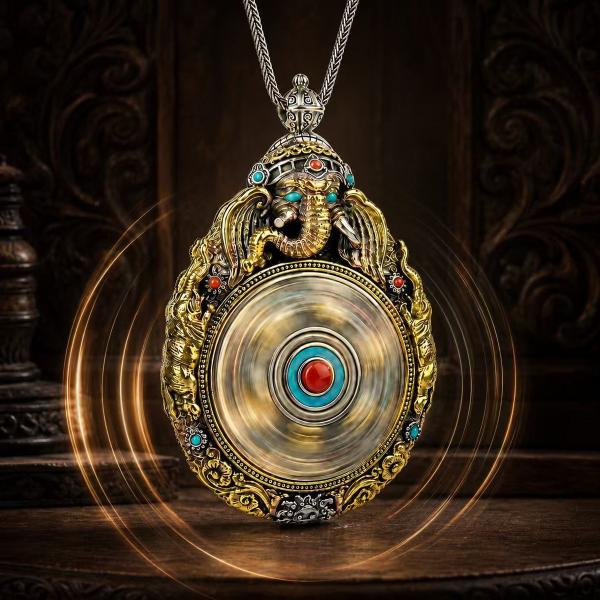
In Hinduism Ganesha is the son of Shiva and Parvati, presiding over wisdom and the clearing of obstacles, and in the Tibetan system he corresponds to Ganapati, counted among the wealth-deity protectors. The thangka way of handling a figure is to fix it inside a set composition: the main deity centred, the halo, lotus seat and implements placed according to ritual rule, the colours conventional too, with blue, green, red and gold each carrying a meaning. The pendant presses that composition into a square inch, and it does so through density of line; the detail only resolves close up, and phone photographs of it often come out soft. In the proportion texts for thangkas, the height of the figure, the hand gestures and the placing of the implements are all measured out, and a little off means it is no longer that deity.
The three options are told apart by different things. Black Jambhala is dark of body and usually shown fierce, one hand holding a mongoose that spits treasure. Mahakala is a protector, often six-armed or two-armed, treading on a corpse, with a savage expression. Zhakila's face is fierce with a trace of a smile, crowned and wearing necklaces, and her cult is especially strong around Lhasa. With three figures in one listing, which one you take is more a matter of personal affinity; there is no ranking by efficacy, and I would not presume to rank them for anyone. Choose the one you like the look of.
The white copper ground is cool in tone, and the depth of the lines reads more clearly in the metal than in photographs; raking light shows the layers. A thangka subject carries a lot of information on its face, so plain high-necked or crew-necked clothes are cleaner, and you should not let a print compete with it. No chain or cord is included by default; if you add one, choose a slightly thicker cord or a woven chain, because a fine chain will not hold this weight and the pendant will turn over on your chest.
There is nothing special about the care: what copper fears is sweat and damp. In summer, press it dry with a cloth after wearing rather than reaching for a wet wipe, since the agents in those wipes cloud the surface. If it is going to sit unworn for a long stretch, put it back in a zip bag with a small sachet of desiccant, which is better than leaving it on a windowsill. Should white spots of corrosion appear, work a little neutral oil over them with a soft cloth and do not scrape at them with a blade. For regular wear, an adjustable cord is worth adding; simply take the pendant off before a shower.