


Menu
By theme
By theme


{{ variable.name }} : {{ variable.values[selectedVariantsIndex[variable_index]].name }}
Quantity:
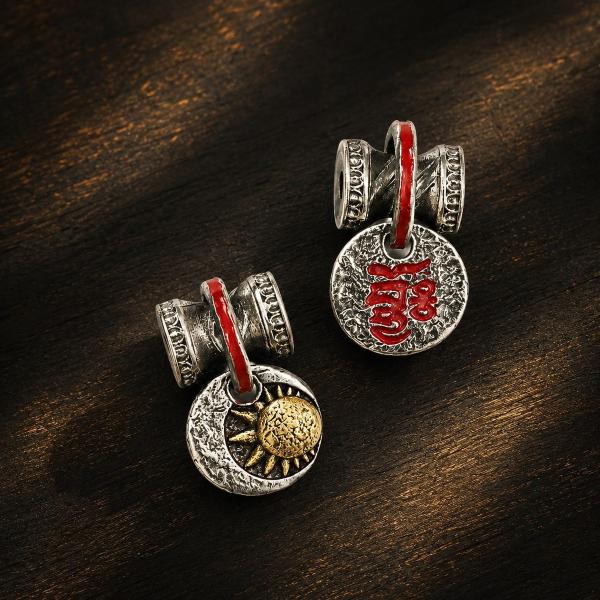
A seed mantra packs a whole line of mantra into a single character. The Tibetan method takes the core syllable of a deity's heart mantra and writes it as one letter in Sanskrit or Tibetan script, called the seed syllable, with one letter standing for an entire figure. In the stages of visualisation, the seed syllable sending out light and gathering it back again are all built around that letter. So a character on a small piece like this is unforgiving: a single wrong stroke is a serious matter in the tradition, and the workmanship does genuinely follow suit. Sanskrit seed syllables and Tibetan ones are written differently, and both forms are found for the same deity. One character has to carry the weight of a whole figure, which is why no stroke can be left out — drop one and it becomes a different figure.
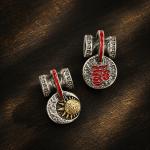
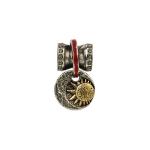
This is a spacer, and in the back office it is filed under earrings. In practice both uses are found: threaded into a bracelet to divide the main beads, or hung from an ear hook as a single earring. As an earring, weight matters. A copper piece hanging from the lobe pulls it down over time, most noticeably for anyone with small holes, who will want it off after half a day. For a single earring, a plain silver bead on the other side keeps the look from feeling lopsided.
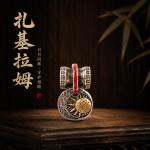
Zhakila has a strong following around Lhasa. She began as an outside local deity and was later brought into the Tibetan Buddhist protective pantheon, fierce of face with a trace of a smile, crowned and wearing necklaces. What people ask of her is practical: wealth, safety, smooth travels, which is why so many of her devotees are in business. At the fixed times each year the queue outside her shrine fills the street. Her offerings commonly include alcohol and tsampa, which is not quite how protector deities are usually served.
The cut of the lettering is the crux on small pieces. Where it is shallow, wear soon blurs the strokes into one another; when choosing, see whether the beginnings and ends of strokes are distinct and whether the space between them is clean. Once the copper darkens, the character in its recess actually reads more clearly, which is one advantage of white copper and a reason many people choose it over gold plate. Deeply cut lettering collects dust in the hollows, and a soft brush run along the strokes deals with it. Copper needs no oil; oil attracts dust.
Pronunciation of heart mantras varies between traditions, and there is more than one way of writing them. If the letterform matters to you, ask which script and which character before ordering rather than guessing from a photograph. A picture blown up ten times and the piece in your hand are two different things: the first can hide a burr, the second cannot. If the character that arrives does not match the picture, do not keep it out of politeness; send it back and change it.