


Menu
By theme
By theme





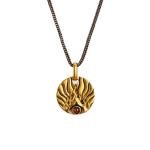
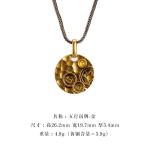
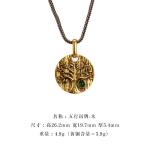
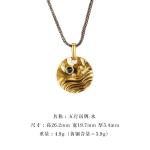
{{ variable.name }} : {{ variable.values[selectedVariantsIndex[variable_index]].name }}
Quantity:
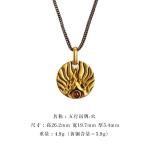
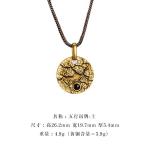
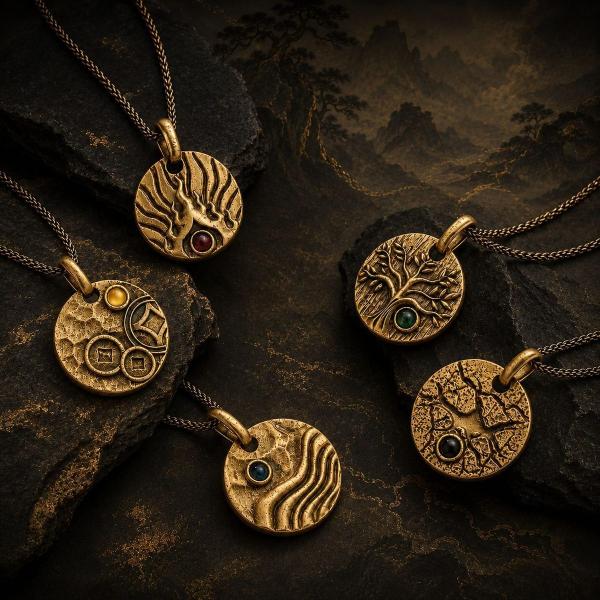
The five-element tag comes in five versions: fire, water, metal, earth, wood. The form is a square tag with one character on the face and either a blank reverse or a band of key-fret. Each of the five characters is simple on its own, and only together do they make a set, which is why plenty of people buy two or three at a time and rotate them to suit the day's clothes and mood. The edge of the tag carries a narrow raised rim, which keeps it from cutting into the hand and makes the face look taut. All five use the same typeface, with strokes of the same weight.
There are two ways of ordering the five phases. The generating cycle runs wood, fire, earth, metal, water, each generating the next; the overcoming cycle runs wood, earth, water, fire, metal, each checking the one a place away. A tag gives only one character, which hands the choice back to the wearer; there is no need to arrange the sequence for them, nor to over-explain, since too much explanation begins to sound like fortune-telling. Generating and overcoming are not two systems but two readings of one ring, one forwards and one backwards.
Traditionally you chose by birth date, topping up whatever was lacking, but that belongs to the fate-calculation arts: believe it if you like, and do not treat it as settled. As an accessory it is more practical to pick the character that suits your temperament: the impatient take water, the taciturn fire, the hesitant metal — each has its rationale, and if it sounds agreeable, that is enough; there is no need to have anyone assess you. To choose by the fate arts properly you would need your eight characters, and a little learning short of a whole discipline is worth less than a character you simply like.
The antiqued finish leaves the recesses dark and the raised areas bright; with wear the highlights grow stronger and the edges of the character round off. A copper tag against the skin picks up sweat, so wipe it with a dry cloth at the end of summer rather than a wet wipe — the alcohol and perfume in those wipes bloom the surface into patches of white. The dark of the antique finish is not paint but an oxide layer, and hard rubbing will expose the bright copper beneath.
The hole sits at the top, and whether there is one or two decides whether it can take a double cord. Two holes hold the cord more steadily and the face is less likely to turn; a single hole swings with movement and shows both faces. Check the holes before buying, so that you know how many strands you need: too thick a cord will not pass, too thin will not hold. Plenty of people collect all five and string them as one hanging for a car or a bag; five characters in a row is livelier than a single one. In a car, keep it out of the driver's line of sight; on a bag it hardly matters, though copper against a zip makes a noise, and a small leather washer dulls it. Threading a two-hole tag needs a fine awl to draw the cord through; forcing it frays the inside of the hole. Tie the cord firmly, so that the tag does not swing about.