


Menu
By theme
By theme



{{ variable.name }} : {{ variable.values[selectedVariantsIndex[variable_index]].name }}
Quantity:
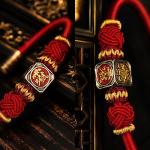
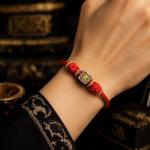
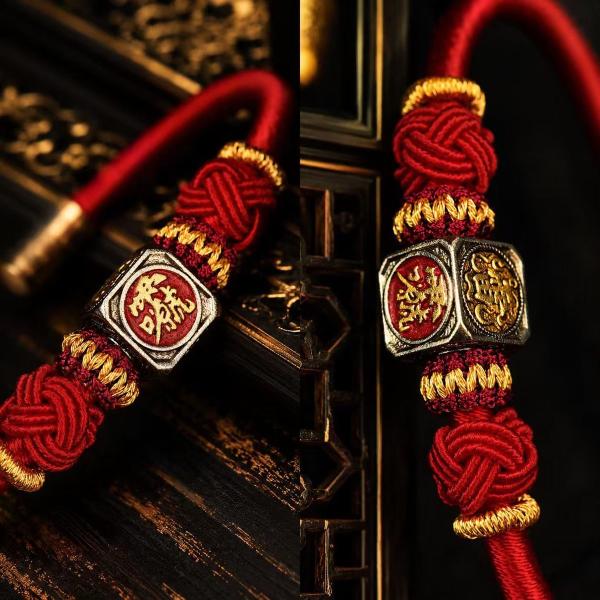
Red cord bracelets are common on the stalls of Tibetan areas, cheap and widely worn. This one has a Zhakila heart mantra piece worked into the middle, which is the approach of building protection into an everyday accessory: it does not stand out, and it does not look out of place at the office or in a meeting, which is where it is more practical than a pendant. Stall bracelets are usually braided to order with the wrist measured on the spot, something buying online cannot match. A cord bracelet looks better worn in than new; the red develops a nap.
Red is the orthodox colour in China: zodiac years, the ages ending in nine, weddings, all require it. In Tibetan areas red cord has more to do with the knot than with the colour, which is less strictly prescribed, and red, black or five-colour thread all appear. The two usages rest on two sets of habit, and neither needs to explain itself to the other, nor is either more authentic. Five-colour thread answers to the five directions and the five Buddhas and is much used in Tibetan custom; in China the five colours are chosen for completeness. The zodiac year runs on the twelve animals, and the cord is worn from one New Year's Eve to the next, a year at a time.
Which wrist to wear it on is disputed. In China there is a saying that things come in on the left and go out on the right; in Tibetan areas there is less fuss about left and right. Follow your own habit: if your working hand is encumbered by it, switch to the other. Anyone who cooks or writes a great deal will have worn the right wrist to shreds in a day. Some wear one on each wrist, cord on one side and watch on the other, for convenience and without ceremony. Left-handers the other way round; whatever is easiest.
When layering with silver bangles or a watch, watch for wear. Copper and silver are close in hardness, and long rubbing leaves black marks on the silver and rounds off the copper's edges. A leather cord between them, or a change of wrist, saves a good deal of trouble. Black marks on silver come off with a silver cloth; a rounded corner on copper does not come back. Watch lugs suffer as well, so keep an eye on them. When layering two or three, keep one plain one as the base.
As a gift, red cord suits almost anyone. If you do not know the wrist size, choose the adjustable sliding knot, and the recipient can draw it in. Packaging need not be elaborate; a plain paper bag is more fitting than a stiff box, since the plainer this kind of thing is, the more it feels right. If the recipient rarely wears jewellery, choose a finer version, as a thick one looks abrupt. A small handwritten card slipped into the bag is better than a printed greeting card.