


Menu
By theme
By theme





{{ variable.name }} : {{ variable.values[selectedVariantsIndex[variable_index]].name }}
Quantity:
Yellow Jambhala heads the five Jambhalas. Yellow of body, one face and two arms, the right hand holding a wish-fulfilling jewel and the left holding a mongoose that spits treasure, seated half cross-legged on a lotus seat. There is more than one wealth deity in Tibetan practice, and Yellow Jambhala stands first, with the largest following. The five are divided by body colour: white, yellow, red, green and black, one of each. Wealth deities are usually shown with a benign face, unlike the fierce protectors. Each of the five has its own mantra, and they should not be mixed in recitation: the lineages differ, and so do the stages.
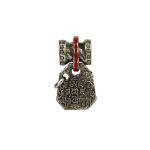
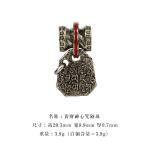
Made as a spacer, the characters usually run in a ring around the body, with the hole passing between them. This arrangement is demanding on spacing — a little wide or a little narrow shows — so turn the bead and see whether the line closes where it began. If it does not, there is a gap, and that gap will be the part facing outward. Where there are two rings of characters, the outer should be larger than the inner, or they crowd together and cannot be read. On beads with deep cutting the cord runs against one side and wears a groove in time. Once the recitation flows, it is fine.
The usual transliteration of the heart mantra is om dzambhala dzalendraye soha. Dzambhala is the name of the wealth deity, and dzalen comes from the sense of holding treasure. Chanting tunes differ between traditions and so do the sounds of the syllables; follow your own lineage, and do not change because someone else says it differently. Dzambhala is Sanskrit, read in Tibetan as dzambhala, and both spellings are current in Chinese. The closing soha means accomplishment and auspiciousness, and most mantras end with it.
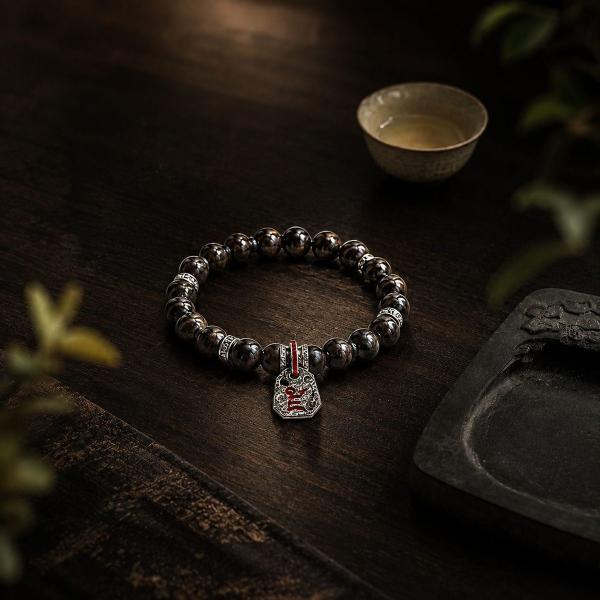
On a bracelet one Yellow Jambhala spacer between the main beads is enough; not every bead needs one. The copper goes with bodhi seed and wooden beads, while bright colours such as South Red or turquoise need care, since they compete with it. With the whole string pitched dark, this bead sits steady. If the main beads are dark wood the copper will jump; if they are South Red, the copper should be antiqued instead. On a dark string this bead is the most conspicuous thing; on a pale string it cannot hold its own.
Once white copper darkens, the hollows of the characters go blacker and read more clearly. Do not clean it with a toothbrush; the bristles are too stiff and will round the edges of the cuts. Press over it with a dry cloth and sweep the hollows with a brush. Some people use it as an earring, a pair of them, which works well enough, as long as you know the weight. A spacer need not match the main beads in material: copper with wood or copper with bodhi both look well, and mixing is what gives depth.