


Menu
By theme
By theme




{{ variable.name }} : {{ variable.values[selectedVariantsIndex[variable_index]].name }}
Quantity:
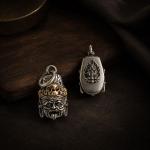
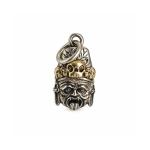
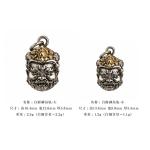
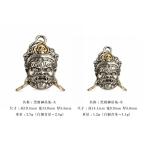
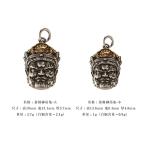
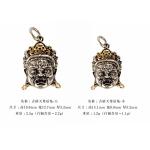
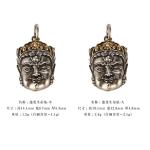
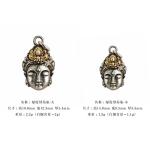
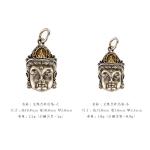
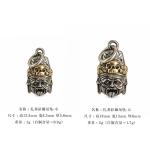
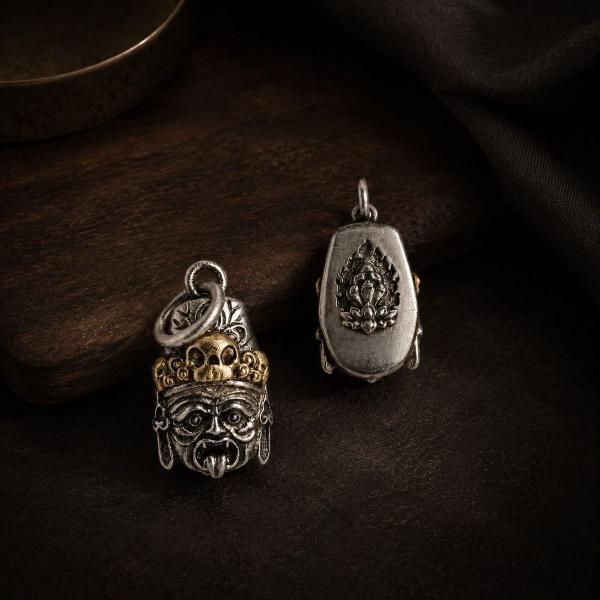
This listing puts six subjects in one place: Green Tara, Zhakila, Palden Lhamo, Padmasambhava, White Jambhala and Black Jambhala. There are also two sizes, large and small. With so many options, make sure you choose both correctly when ordering, and do not go by the pictures alone. The photographs are mixed together, and the main image may not be the version you picked. The six subjects each look different, and the main image usually shows only two or three; the individual pictures in the description are more reliable. Large and small refer to overall height, not thickness, so do not guess by feel.
The large size suits outer wear, on a jumper chain or a long cord, hanging outside the clothes; the small one sits close, on a short chain or as a charm on a bracelet. There is no need to own both — pick one to match how you usually dress. Wearing the large one in winter and the small one in summer is another way of doing it. The large size wants a thick cord; a fine cord with a big piece looks top-heavy. For the small one as a bracelet charm, the hole in the three-hole bead must take the cord, so do not force it.
The six subjects belong to different systems. Green Tara is of the Tara class, presiding over compassion and rescue; Palden Lhamo is a protector, blue-black of body, riding a mule, the most commanding of them; Padmasambhava is a founding master, neither a Buddha nor a protector, wearing a red hat and holding a vajra; White Jambhala and Black Jambhala both belong to the wealth class, one white of body and one black. Palden Lhamo has an eye on the rump of her mule, the strangest detail in her iconography and one that is usually impossible to render. White Jambhala is white and relatively benign of face; Black Jambhala is black and mostly shown fierce.
The antiqued treatment leaves the hollows dark and polishes the raised areas, imitating the patina that old pieces acquire from handling. It is common on copperwork; the advantage is that it gives depth, the drawback is that the dark in the hollows lightens with wiping, and over the years has to be restored by natural oxidation. Rushing that restoration only makes it look false. The dark mostly stays in the robe folds and the lettering and is generally kept off the face, where it looks dirty. If the dark in a hollow has been wiped thin, pressing over it repeatedly with a dry cloth brings it back slowly.
Of the six, Zhakila and Green Tara move fastest and draw the most questions. If one is out of stock, do not rush to switch subjects; ask when it will be back, which is better than receiving the wrong one. Give a copper piece a wipe with a dry cloth when it arrives, to take off the workshop dust before wearing, or the back of your neck will go black. Of the six, Padmasambhava and Palden Lhamo are held in the smallest numbers, move slowly and are slow to restock. Ask first and then order, and save yourself the round trip.