


Menu
By theme
By theme




{{ variable.name }} : {{ variable.values[selectedVariantsIndex[variable_index]].name }}
Quantity:
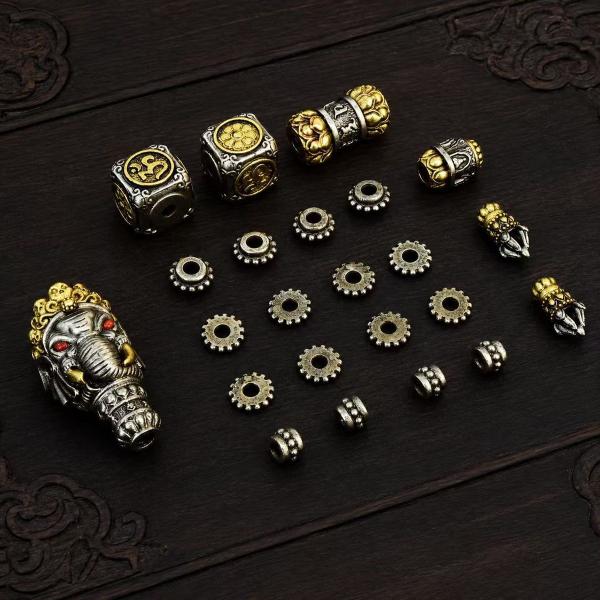
Ganesha is missing a tusk. This is not a second, that is how the image is drawn. The head is in profile, the long trunk curling to the left, the broken tusk on the right. White copper in its natural state leans silver; the lines are shallow and the form is read from the outline, so the trunk and the curve of the ear only come clear when light falls across them at an angle. A profile is harder to recognise than a frontal image, and it rewards longer looking: turn it and the expression changes. The tip of the trunk is polished roundest of all, so a fingertip can rub back and forth without catching.
In Hinduism Ganesha is the remover of obstacles, invoked before ceremonies, openings and long journeys, asking for fewer obstructions on the way. Taken into Buddhism he becomes Ganapati, his position changed to that of a protector, his role still including increase. The same figure carries different accounts in the two systems, which is common enough in the transmission of images: merchants travel the roads and the statues travel with them, growing into whatever shape each place gives them. The broken tusk is kept everywhere, and has become his identifying mark.
A three-hole bead is the one bead on a string with three holes, set at the guru position: the two outer threads pass through the side holes, the main hole runs down the centre, and one bead gathers the whole string. This is a set, so the three-hole bead comes with matching pieces and you need not hunt for colour and size one item at a time. White copper does not compete for colour. With dark wood, bodhi seed or South Red agate it never clashes, and if the combination is too busy you stop seeing it at all.
When stringing, melt the end of the cord to a point first, and do not force it through. The walls of a white copper hole are thin, and widening one with an awl easily splits the edge, so better to drop to a finer cord. Arrange the beads and discs as you like: heavy cord with large pieces, fine cord with small ones. Once the proportions run true the whole string looks right; otherwise one big bead sits on a heap of small ones and no amount of rearranging helps. Do not use every small piece in the set at once. Keep two back, and they will match beads you add later.
New pieces carry a light surface bloom that softens with handling. Store them separately when not worn, away from keys and scissors. People who build their own strings mostly care about the combination, and the value of a set like this is convenience rather than the number of pieces. White copper darkens over time; a pass with a silver cloth brings it back, and a polishing machine is unnecessary.