


Menu
By theme
By theme





{{ variable.name }} : {{ variable.values[selectedVariantsIndex[variable_index]].name }}
Quantity:
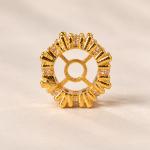
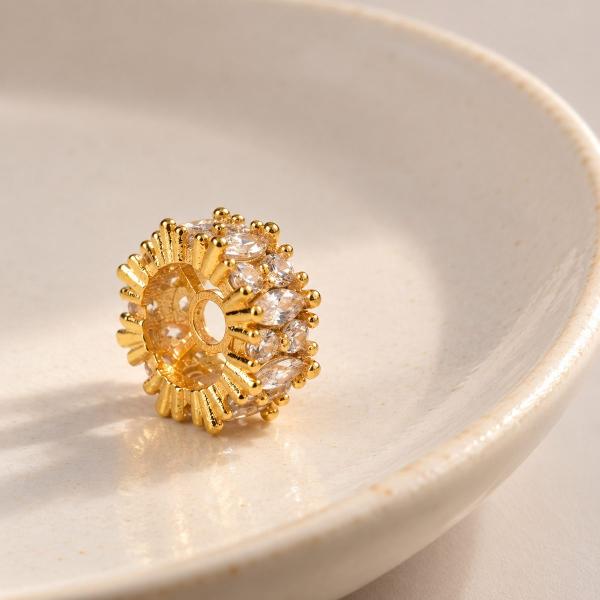
The name comes from the shape. Around the outside runs a band of raised ridges, the whole thing is a diamond, and the four corners are rounded off. Zircons sit in the ridges, one wedged into each groove, so the light comes in pulses as the bead turns and goes dark between them. The copper ground is on the dark side, the tops of the ridges polished back, the channels left dark, and the layering reads clearly. The hole through the middle is bored true, and the cord passes without pulling to one side. The bright ridge tops and the dark channels line up ring after ring, like graduations.
A tyre shape arrived in spacer beads fairly late, borrowed from the look of industrial parts. Its advantage is a small contact area. The ridges bear against the neighbouring beads, friction happens along a few lines only, and the mouth of a main bead's hole is less likely to chip. That narrow band of contact is the whole point of the shape. The diamond outline also gives it a definite front: four corners pointing four ways, so it stands firm whichever way it turns, and the string never catches it at a bad angle. That steadiness matters on a long string. A row of beads sitting crooked usually means the wrong spacer was chosen. Its diameter runs a size smaller than most main beads, so it does not fight for room in the middle, and it does not push its neighbours apart either.
String it between two large beads, where its job is to hold the distance. It grips its position better than a round bead and does not slide off to one side, which is useful on a string where the arrangement matters. Put two on the same string, spaced well apart, and a rhythm appears without any other change. It is not fussy about colour: dark wood holds it, pale bodhi carries it, and that small white light in the zircon catches anywhere. Strung tight, ridge bites against ridge and the section does not slacken.
A diamond has corners. They are rounded, but pressed against soft wood over months they will still leave a mark, and if that worries you, add a thin disc on either side for a little cushioning. If the ridge lines polish bright with wear, that is normal; it means the bead is genuinely taking the load. The zircons sit on the ridges and fear a sideways knock, so do not drop it into a bag with keys: one chipped corner and the whole bead sits unevenly. Grime collects in the channels over time; a soft brush with soapy water, rinsed and dried, will clear it.