


Menu
By theme
By theme



{{ variable.name }} : {{ variable.values[selectedVariantsIndex[variable_index]].name }}
Quantity:
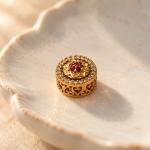
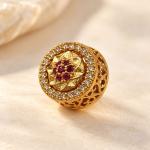
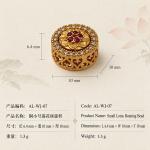
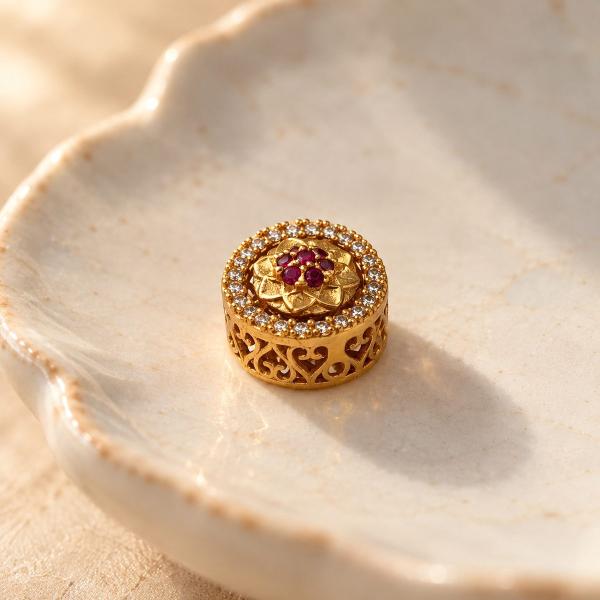
One flick of a finger and it turns twice, coming to rest wherever it happens to stop. Below is a lotus base with openwork petals, one layer pressing on the next, and above it a small bead on an axle. The copper is left in its natural colour, with the petal edges polished brighter and the recessed parts keeping their dark, so the layers separate even in dull light. As it spins, the shadows of the petals travel round the base, then settle back into place. The underside of the base is flat and wide, so it will sit still on a desk and will not roll off a table by itself.
Spinning structures are common on Tibetan objects, the prayer wheel being the obvious one: a flick of the hand and the body turns, and what it turns is the business on your mind. A small bead cannot carry that mass, but it borrows the same gesture. Push it with a fingertip and it makes two turns before stopping, in a different place each time. Some people keep it as something to do with the hands, flicking it while thinking; it is quieter than spinning a pen.
The openwork petals have to be thin to let light through, and thin metal distorts easily, so every petal carries a rib on the back. Turn it over and the supports are visible; from the front they are hidden. There are not many layers: three is enough on a piece this size, and more would blur the whole thing into a mass, leaving nothing but an outline once it is a little way from the eye.
With any moving structure, the thing to fear is looseness. A new piece should turn with a little damping; if it spins too freely, the gap between axle and hole is too wide and it will wobble in time. The test is simple: hold the base and shake it gently, listening for a faint rattle. A rattle means the clearance is wrong. If it does come loose, do not take it apart yourself. The axle is riveted, and once opened it will not go back. The petal tips chip most easily, and a chip stays black for good.
On a string it usually sits near the guru bead, or serves as the drop on a charm. Turning it makes a slight sound, copper against copper, not sharp but dull. Some people find the movement distracting; others like exactly that small noise. The axle dislikes dust and water. Dust makes it stiff, and a drop of sewing machine oil will ease it, though not cooking oil, which goes rancid. Take it off for showering: water in the axle seam dries into a ring-shaped mark.