


Menu
By theme
By theme

{{ variable.name }} : {{ variable.values[selectedVariantsIndex[variable_index]].name }}
Quantity:
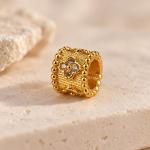
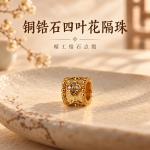
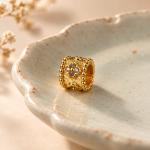
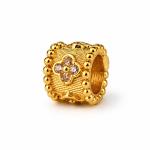
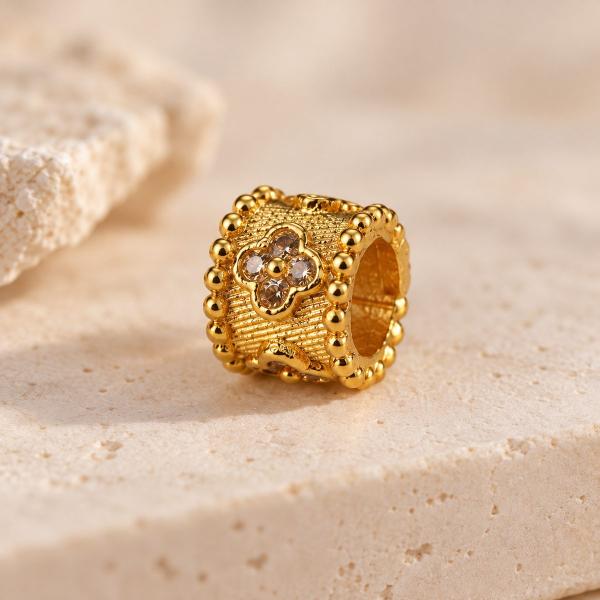
Some people take this for a four-leaf clover, and it is worth being clear that it is not. It is a four-petalled flower, the petals lifted slightly, a zircon set at the heart and pressed a little below the petals so that it does not dig into the hand. The brass ground is warm, noticeably yellower than white copper; the petal edges are polished back and the hollow at the heart stays dark. The four petals are symmetrical, identical in all four directions, with no front and no back.
The four-petal rosette is everywhere in traditional ornament: window lattice, bronze mirrors, brocade, porcelain. It is almost always this structure, one centre with four directions opening out from it. The two are often confused, but they come from different traditions. The clover is a lucky symbol that came from the West, and its point is the odds of finding one; the rosette is an old pattern, and its point is symmetry and completeness. The rosette does not deal in chance at all. It is a product of symmetry: divide a lattice into panes, lay motifs out on cloth, and four equal parts is the easiest and steadiest division there is.
Brass's warm tone sits well with materials of the same family. South Red agate, amber, blood amber: these reddish stones make their transition most smoothly through brass, which does not turn cold the way white copper does. Against turquoise or lapis the contrast is blunt, which is a matter of taste. Between dark wood it does not look grubby either, since the brightness of the brass comes through the black. The zircon is white, a single point of light at the heart, and it stays contained. Dust gathers in the hollows of the petals, and that dust actually makes the flower shape read more clearly.
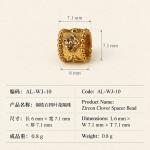
As a spacer its thickness is medium, right for sitting between two main beads without forcing the string open. The petal tips face along the hole, the cord passes through the heart, and the petals open to either side: a flower from the front, a narrow edge from the side. Two or three on one string, spaced apart, look like small flowers scattered among the beads.
Brass oxidises, its colour moving from bright yellow slowly towards brown, and some people cultivate that change deliberately. Zircon chips, and so do the petal tips, which curl when knocked. Wrap it in a soft cloth when it is not being worn, and keep it away from hard objects. The brown of oxidised brass is even, quite unlike the mottled look of an artificial antique finish: one is time and the other is craft, and there is no harm in keeping both.