


Menu
By theme
By theme



{{ variable.name }} : {{ variable.values[selectedVariantsIndex[variable_index]].name }}
Quantity:
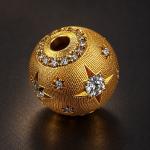
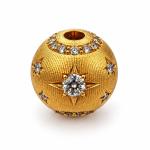
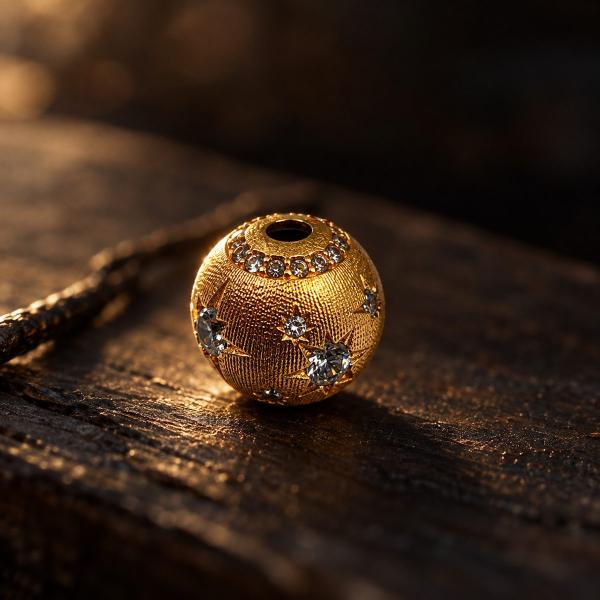
Eight points, eight directions: turn it once and the highlights travel all the way round. The eight points rise from the centre of the sphere into an eight-pointed star, blunt rather than sharp, rounded under the finger. The surface is brushed, the grain following the curve of the sphere rather than running straight up and down, so from any angle you catch a continuous stretch of it. Light rolls across the surface, and the star holds it in one place. Fingerprints wipe off with a soft cloth; a wet wipe is not needed.
The eight-pointed star is the easiest and most durable of geometric patterns: two squares laid over one another at forty-five degrees and the eight points appear. It is a common motif in Islamic ornament, and old Chinese bronze mirrors carry similar eight-ray lines under different names, with different accounts attached. A pattern gets reinterpreted wherever it travels, while the shape stays the same. Two strokes of a pen will draw it on paper, which is why it turns up across cultures without anyone needing to borrow it from anyone else.
The light on a brushed sphere is matte. It will not show a reflection of a person, only a soft sheen. That surface is comfortable in the hand, not slippery, and the fingertip can feel which way the grain runs, which is half the pleasure of it. A spherical bead has no orientation, so it looks the same whichever way it turns, which makes it the natural choice for a position where it will simply land as it lands.
The eight points make it more visible than a plain round bead. In the middle of an unadorned string it becomes a quiet focal point; on either side of the guru bead, it looks like two small bells. Its points light up in sequence as it turns, one after another as the angle changes, a rhythm no round bead can give. That same quality makes it unsuitable against the body, where it digs in when you turn over in the night. Nor does it belong at the end of a charm, since its weight drags the cord straight.
A copper sphere dislikes being dropped. On a hard floor a point dents, and a dent cannot be repaired. Dust settles in the brushed grooves, so brush it dry with a soft brush rather than rinsing it, since water leaves marks as it runs over a curved surface. With long wear the colour deepens towards brown, and a wipe with a soft cloth will bring back about half of it. Fingerprints show more on a sphere than on a flat face, and a scrap of chamois carried in a pocket earns its place.