


Menu
By theme
By theme


{{ variable.name }} : {{ variable.values[selectedVariantsIndex[variable_index]].name }}
Quantity:
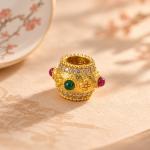
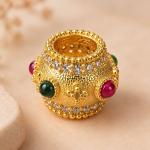
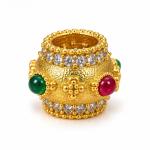
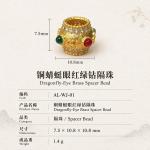
Eye patterns carry more stories than any other motif on old beads. This is a round bead with concentric circles across the surface: a dark centre, then two or three rings around it. Once plated, the ridges between the rings turn bright and the grooves stay dark, and the eye appears. The bead is not large, the hole is straight, and the cord runs through smoothly. A very narrow border at the outer ring contains the pattern, so that it does not spill over onto the back.
The name dragonfly eye first belonged to a kind of glass bead made in the Warring States period. The body was inlaid with concentric circles in blue and white, like the compound eye of a dragonfly, and the name stuck. Beads of that kind came in from West Asia and Egypt, were copied and adapted in the Central Plains, and ended up as things found only in aristocratic tombs. The core of the technique is inlay: layers of differently coloured glass set into the body and ground flat once cool. Old books did not separate glaze from glass, and only modern writing distinguishes them, so calling it a glass bead is not wrong.
This one is gold-plated brass, carrying the idea of that pattern rather than being glass. On the gold surface the concentric circles are made by ridges and grooves, and light makes the rings float up. Understand that and you will not set it against a Warring States bead, since the two are not in the same category: one is an ornament and the other is research material. Plated reproductions are common enough; the difference lies in the depth of the rings and the evenness of the plating, and a few pieces in the hand will teach you to see it.
On a string it works as an accent, not as a main bead. The eye has a direction, and it looks best facing out, so mind the orientation of the hole when stringing and do not let the eye sit crooked. Between two plain beads, one eye showing is more rewarding than a whole row of them. Dark wood is the steadiest partner, the gold eye bright against the dark like a small lamp at night. Where the whole string is dark, one eye is enough; two eyes facing one another look slightly fierce.
The plating is thin, so do not rub it hard with a cloth, or the brightness goes. When dust gathers in the grooves, brush along the rings with a soft brush. Do not soak the bead: water that gets into a groove dries to a white line, and a white line on gold is very conspicuous. Keep perfume away as well, since alcohol clouds the plating where it lands.