


Menu
By theme
By theme



{{ variable.name }} : {{ variable.values[selectedVariantsIndex[variable_index]].name }}
Quantity:
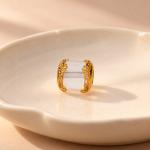
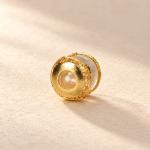
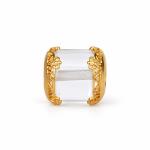
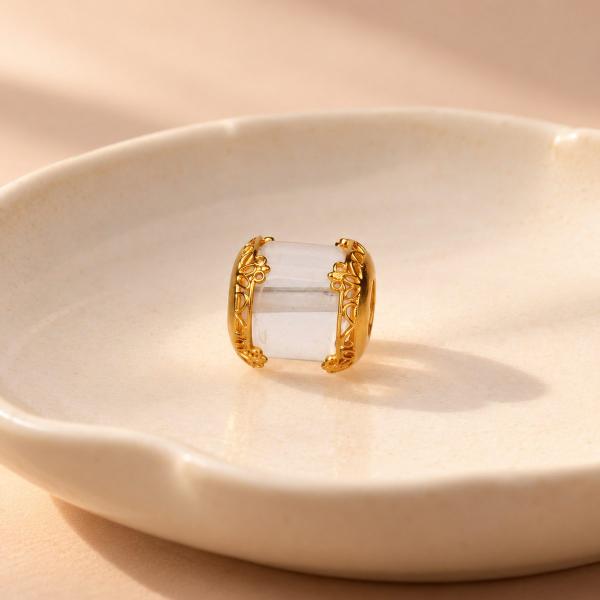
The hole in a barrel bead runs straight through from end to end, so thread pulls evenly at both ends. That makes it equally usable as a focal bead or as a spacer. Here the copper rim sits over the two ends and leaves one unbroken stretch of quartz in the middle; turn it and light slides along the curve rather than breaking into sparks. That is how clear quartz behaves, not a coating laid on the surface. A simple test: set it on white paper and look from the side. The colour is transparent, not a film of white floating on top.
The barrel is flat at both ends and swollen in the middle. Strung on a line it sits steadier than a round bead and is less inclined to spin. This piece has a copper rim wrapped around the outside, the sheet pierced with an openwork flower, so light passes through the openings and the stone's transparency finally shows. The rim is even in width throughout, gripping both ends of the bead and leaving the curve at the front clean.
The rim protects the two end faces, which are exactly where thread does its worst rubbing. Clear quartz is hard enough and brittle enough; knock it against a table corner and a chip comes away. The copper band is a hoop around it. The openwork is not dense — more copper is left than hole, and that is what gives it the strength to hold. Every opening has been chamfered, so the edge feels round and neither scratches a finger nor cuts thread. Details like these are only clear under a loupe, and nobody leans that close to a wrist, yet they cannot be skipped in the making. The rim's cross-section is round, so there is no burr anywhere.
Clear quartz against copper is cold white meeting warm yellow. Dropped into a strand of same-coloured beads it will shout; if you want it quieter, set it between dark wooden beads, where the copper weighs the white down and the white lifts the copper in return. Most people who buy this bead want one point of emphasis in a plain strand. My advice is to use a single one, placed just above centre. Two or more compete with each other, and the openwork detail stops being legible.
Copper oxidises; the colour travels from bright yellow towards dark brown. That is the metal's nature, not dirt. If you would rather it did not happen, wipe it with a dry cloth as a habit; if you want to keep the brightness, run a silver cloth over it now and then. Do not put the quartz end in an ultrasonic cleaner — sustained vibration loosens the rim over time. Store it in its own small bag rather than loose with other beads, which will grind against it. In summer, when sweat is heavy, wipe it once when you get home before it goes back in the box.