


Menu
By theme
By theme


{{ variable.name }} : {{ variable.values[selectedVariantsIndex[variable_index]].name }}
Quantity:
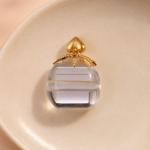
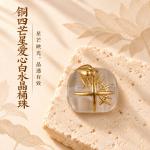
A heart and a four-pointed star pressed onto the same bead: from the front you see the star, from the side the heart. The pairing is uncommon, and the first decision in making it is which shape goes on top. Put the star over the heart and the heart becomes an outline; put the heart over the star and half of each star point disappears. This one has the star in front, with the heart's two arcs showing between the star's four corners. Both shapes sit on one face, and that is where the difficulty concentrates: the star's inner angles have to leave room for the heart's curves.
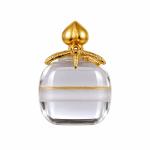
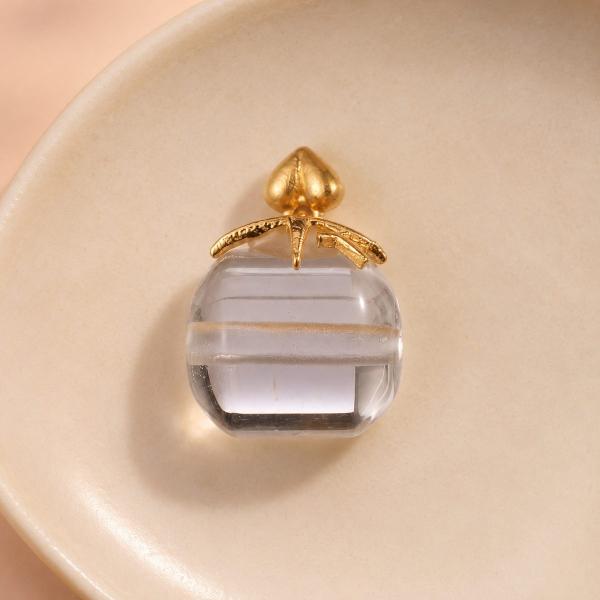
The quartz is cut as a barrel and the copper sheet applied to the front. Its four points bend down slightly to follow the bead's curvature rather than sitting flat; only then does the sheet lie on the curve without lifting at the edge. A lifted edge catches clothing, and cuffs and scarves are what it catches first. The copper is made thin so that it lies close to the stone. Thicker metal would look clumsy on a bead this size.
In pattern language the four-pointed star is about direction: four points for four directions. One point fewer than a five-pointed star makes it read as more restrained. The heart belongs to a different vocabulary, a Western one — two arcs and a point, needing almost no explanation. The two symbols each say their own thing, and forced together they can look pasted on. What saves it here is that the copper is a single thickness throughout, so visually it still holds together.
The barrel works as a focal bead and equally as a crown bead. The quartz body is clean, the copper sits at both ends, and the heart and star in the middle are the only ornament. One of these in a strand of plain beads lasts the eye longer than three or four kinds of fitting piled together. If you already own a wooden strand, swapping this bead in will change it more than buying a new bracelet would. For cord, dark brown or black; a pale cord makes the copper look grey. Keep the plain beads to two colours at most.
Copper dislikes sweat; wipe it after wearing in summer, before it goes away. The quartz's edges and corners chip most easily — dropped on a hard floor it will usually take a small knock, and a chip cannot be repaired. Store it alone in a soft pouch, not jammed in with metal fittings. Dust collects in the open areas; brush it out with a soft brush rather than picking with a needle, since the copper is thin and a needle will bend it out of shape. A little clearance is left inside the rim, an allowance from the wrapping. The heart's point has to be offset from the star's corners; if it is not, the two shapes sit on top of one another.