


Menu
By theme
By theme


{{ variable.name }} : {{ variable.values[selectedVariantsIndex[variable_index]].name }}
Quantity:
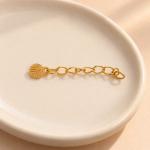
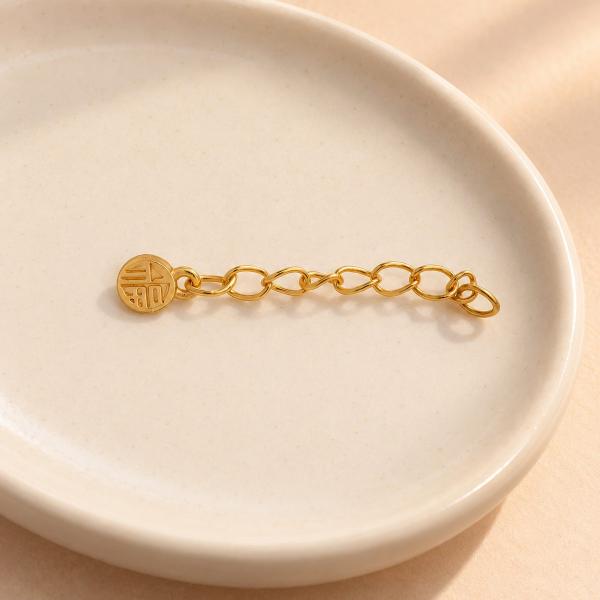
A tail chain hangs at the end of a necklace or bracelet and does two jobs: it extends the length, and it finishes the piece. Here the finish is a round plaque with the character fu pressed into the face, the carving deep and a narrow border left at the rim. The plaque is a true circle with no gap, and turned over the back is plain. It is not thick, and the edge is rolled so it does not catch clothing.
The character fu is used very widely in folk practice: pasted on doors, written inside the bases of bowls, woven into cloth. Its form has changed many times, from the oracle-bone shape of a wine jar to the regular script of later centuries, and its meaning widened from sacrificial wine and meat to things going well in general. The round plaque takes the circle for completeness; compared with a square plaque it is softer, and more common on personal ornaments. Square is about uprightness, round about smooth passage — two different aims. Writing fu well means writing it full; the strokes should not be thin, or it looks mean.
Copper plaques are usually stamped. The character stands proud on the face and is recessed at the back, so both sides can be read. The reverse is a little shallower than the face, which is normal with stamping rather than a fault. The edges of the lettering carry a slight radius, a trace of the die having been polished, and they do not cut the finger. A stamped plaque bows very slightly at the back, and that curve means it does not feel cold against skin.
Length depends on how much the original chain lacks — enough is enough. Watch the orientation when fitting: the plaque should hang on the outside of the chain, not turn inwards, or it will press into you. Use split rings, not soldered ones; a soldered ring loosens the first time it is opened. If the original has a lobster clasp, fit the extension at the clasp end, not at the pendant end. There is some play where plaque meets chain, so hanging it settles itself the right way round.
Copper changes colour. The recesses of the plaque darken first while the raised character brightens with wear, and the two tones gradually separate into layers. To remove the oxide, rub with lemon juice and salt, rinse, and dry at once — do not leave it standing wet. Keep the acid away from stones and knots; left in a crevice it keeps eating at the copper. Do not use the same cloth on silver afterwards, since cloth carrying acid will damage it. Used to finish a bracelet, the plaque sits on the outer wrist and takes a turn of the arm to be seen.