


Menu
By theme
By theme

{{ variable.name }} : {{ variable.values[selectedVariantsIndex[variable_index]].name }}
Quantity:
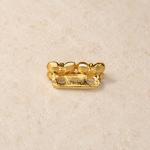
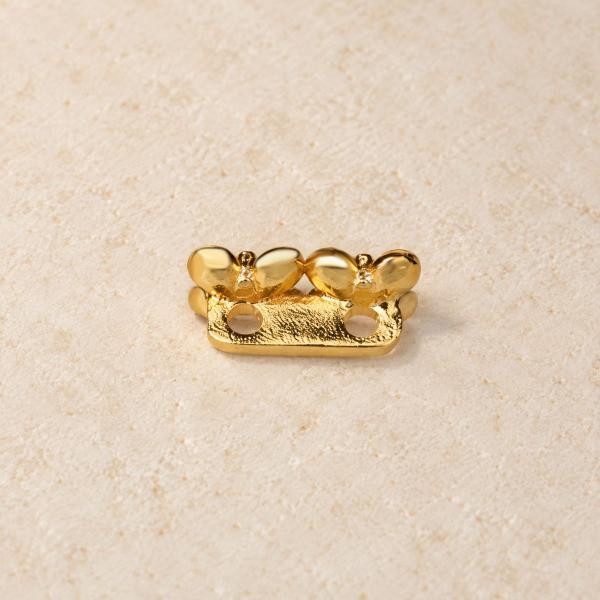
A two-row clasp is a finishing piece for a cord bracelet: two rows of holes, the cord entering from either side and knotted off separately, which is what keeps the two ends level. It uses more cord than a single-row clasp, but the finish comes out neater, with no one side longer than the other. The holes are offset between the rows so the cords do not pile on top of each other. A groove runs between the rows, keeping each cord to its own channel.
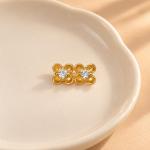
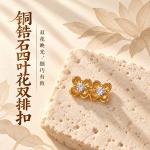
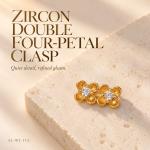
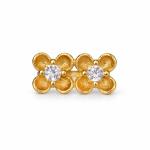
The face carries a four-petal flower, the petals evenly divided, one zirconia at the centre. In the West the four-leaf form is a luck symbol: a shamrock is said to grow a fourth leaf now and then, and whoever finds one gets the luck. In China a four-petal flower is more likely to be read as a simplified crab apple or osmanthus. One shape, two explanations, and a jeweller need not take sides. The petals are equal in width and equally spaced, which is what even division buys: four identical units with no obvious starting point. The centre sits slightly high and reads as a small dome from the front.
Hole spacing on a two-row clasp is fixed, so measure your cord before choosing. Too fine and it rattles in the hole; too thick and it will not go through. Two strands or four are usual, and with more strands you need to gather them once before the clasp. Finish with a flat knot rather than a hard knot, which bulges at the mouth of the hole and stops the clasp sitting flush. Pick a darker cord; pale cord goes grey within a season. With four strands through two rows, each strand takes one hole and none cross.
Copper base. The petal edges are worked into a rise and fall rather than left flat, so light divides into highlight and shadow across each petal. The zirconia is round, its setting tucked between the petals where it hardly shows from the front. Petals thin from centre to edge, and the thin edge will not take pressure — press it and the dent stays. White stone against yellow copper, and the two colours do not quarrel at all.
The clasp is where a bracelet takes its load, and while the copper is strong enough, cord will wear grooves at the mouth of the holes. Run a finger over them now and then; if a burr rises, take it down with fine abrasive paper before it cuts the cord. Check the whole thing when you restring — cord and clasp age together. A small ring is soldered to the back; its opening should face outwards, away from the skin.