


Menu
By theme
By theme




{{ variable.name }} : {{ variable.values[selectedVariantsIndex[variable_index]].name }}
Quantity:
Gold plating is thin, and friction will bring the copper through. Keep it away from places that meet a desk or a keyboard all day. On someone with sweaty hands, one summer is enough to redden the edges, which is the copper base showing through. Once it has reddened, no amount of polishing brings it back; it needs replating, or you let it age. Worn gold plate develops a mottled look that some people prefer, and there is no arguing with that; it is simply a different object from the one that was sold.
The evil eye is a blue eye, concentric rings one inside the next, with a deep blue pupil at the middle. Its model is the amulet of the eastern Mediterranean and western Asia, called nazar in Turkish, hung at doorways, in cars, on a baby's clothes. Most are glass, blue enough to catch the eye at a glance, and made in numbers because they are meant to be replaced. There are three rings, the outermost the widest and each one inwards narrower. The eye is circular rather than almond-shaped, which is where it differs from the Egyptian eye.
In that belief the eye turns aside the gaze of envy: being looked at too long brings bad luck, so you need an eye that looks back. This is folk belief, with local versions differing, and a common logic of an eye for an eye. Believe it or not, the symbol is instantly recognisable, which is why it travels so well outside the region it came from. Turkish blue eyes are usually glass; drop one and you replace it without much regret.
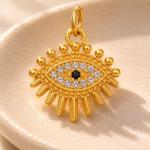
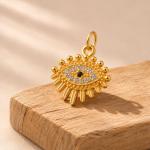
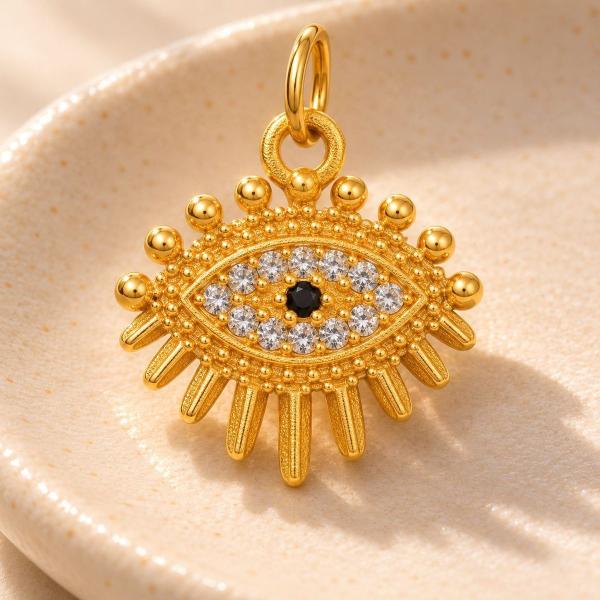
This one is not the usual blue but a gold base with white zirconia. The gold-plated copper mount forms the socket and the stones are set in rings, with a dark stone at the centre. Gold holds down the blue that the symbol normally carries, so it reads as jewellery rather than amulet. Without the blue the meaning thins, and it becomes easier to wear with anything. The stones are white; only the innermost is dark, and that single dark point is what still reads as a pupil.
The loop sits at the top, with a small opening for a fine ring. The piece is not heavy and works on a bracelet or a bag. Clean it with a dry cloth only — no silver dip, since the chemicals strip plating. Dust gathers between the stones; brush it out dry with a soft brush rather than wet, because water creeps under the plating. Add a lobster clasp if it is going on a bag, so you can take it off easily. Choose a slightly heavier ring; too fine and it will not carry the weight, and the eye will hang off the piece.