


Menu
By theme
By theme

{{ variable.name }} : {{ variable.values[selectedVariantsIndex[variable_index]].name }}
Quantity:
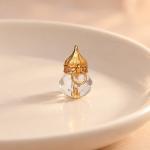
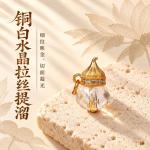
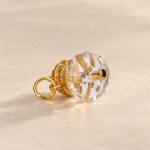
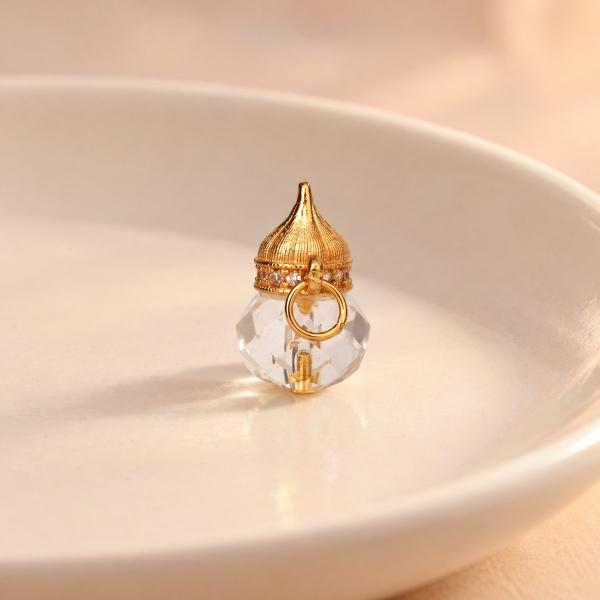
The quartz is faceted, with the most faces on the belly, one tier over another. Faceting turns transparency into scattered light, which is a different thing to look at from polished stone. The copper makes the lid and the foot ring, with the loop on the lid. A fine seam is left between lid and neck; it is not a tight fit. Making the two separately makes each easier to work, and lets water into the seam — mind that when washing your hands. The facet angles differ, so light entering at the front leaves at the side.
The treasure vase is one of the Eight Auspicious Symbols. The set varies slightly from place to place; the usual eight are the parasol, the golden fish, the vase, the lotus, the conch turned right, the endless knot, the victory banner and the wheel, and within them the vase stands for the perfection of wisdom and merit. In Tibetan contexts the eight are painted on bowls, doors and ritual objects — a whole system of signs. Taking one out for a piece of jewellery is like lifting a single sentence out of a set text. The order differs between traditions, so there is no need to memorise it.
The vase has its own reading in Han Chinese usage: ping, the word for vase, sounds like ping, peace, so a vase stands for safety. Tibetan treasure vases and Chinese vases are not quite the same form — the former has a lid and ribbons, the latter is usually a plum vase or a yuhuchun. This piece follows the Chinese vase more closely: long neck, full body, foot ring. Two traditions meet in one shape. In the making nobody decided which came first; the shape simply had to be right. A plum vase has broad shoulders and a yuhuchun a slender neck, and the two outlines are entirely different.
The dangle is taller than most and hangs low on a bracelet. It suits a short strand; on a long one the beads swallow it. The mouth is drawn in narrow, and the loop sits dead centre on the lid. The foot ring is open, so from below a little of the quartz base shows. The weight sits in the belly, so it hangs straight rather than tilting.
Dust collects along the facet edges, particularly the band around the belly. Use a soft brush rather than a cloth, which pushes dust into the joints. Quartz fears falls, copper fears sweat, and this piece has both to consider, so wear it with a little care. Knock a corner off a facet and the light through the whole stone breaks up; it cannot be repaired. Keep it in a soft pouch, not a pocket with keys. The belly carries the most facets and therefore takes the most knocks.