


Menu
By theme
By theme


{{ variable.name }} : {{ variable.values[selectedVariantsIndex[variable_index]].name }}
Quantity:
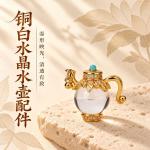
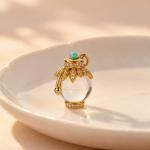
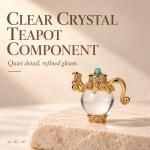
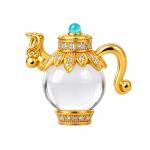
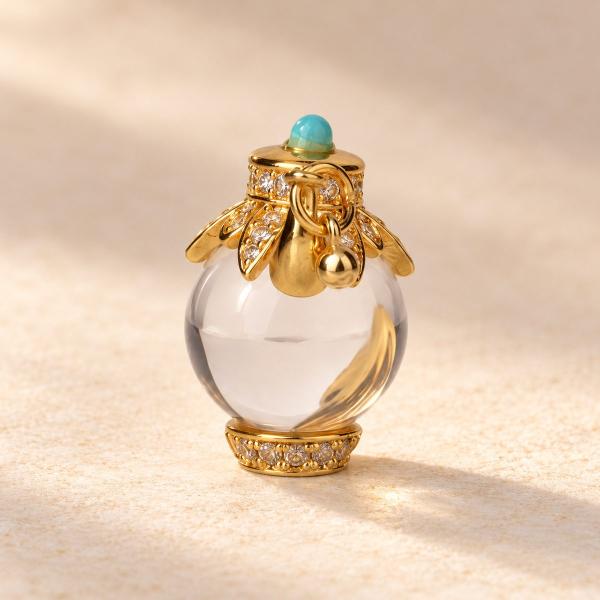
Tidiu is the curio trade's word for the little cluster of charms hung below the guru bead of a bracelet. This one is shaped like a small kettle: a swollen body, a short spout tipping upward, a handle arching over from both sides, a few stones set into the lid and a clear quartz bead joined to one flank. The whole thing runs sideways rather than in a vertical line, so what it takes up on the strand is width, not length.
Copper is ductile, and a domed body like this is raised by hammering and then refined, so the curve keeps a very fine undulation from the work. The stones sit at the joint between lid and handle, and light crossing them throws one or two points of brightness without glare. The quartz hangs below, a single clear bead pulling the weight of the metal downward so the charm doesn't ride top-heavy. Ask before buying whether the spout is open or sealed: an open one collects dust and catches loose threads more readily.
The kettle carries a good deal of story in Chinese. The old medicine seller who hung his pot at the market gate gave the phrase about healing the world its shape; the world inside the pot comes from the divination chapter of the Book of the Later Han, where Fei Changfang watches a medicine seller leap into his pot and finds a whole pavilion inside. A piece of jewellery borrows such sayings lightly — no need to take them literally when the shape already carries itself. A vessel used as ornament takes its meaning from capacity, which is more discreet than carving the words on.
On a bracelet the charm turns with the wrist, and the direction of the spout makes no difference to how it wears. It is on the short side, which suits a densely strung bracelet; on a loose one it swings and knocks against the back of the hand as you walk. When both hands are busy, tuck it into a cuff so it stops moving. If the gap inside the handle is narrow, a thick cord will jam, and a finer braided cord runs more smoothly.
On a stone-set copper piece the stones gather a film of oil over time; wipe them with a cotton bud dipped in mild detergent rather than soaking the whole thing. The space between spout and handle collects dust, and a toothpick wrapped in soft cloth will see to it. Copper oxidises and dulling is normal; a silver polishing cloth brings it back, but skip toothpaste, whose grit scratches the stone faces. The hole sits at the top of the handle, so the cord takes the wear rather than the copper, and a new cord costs less than a repair.