


Menu
By theme
By theme


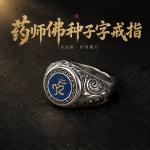


{{ variable.name }} : {{ variable.values[selectedVariantsIndex[variable_index]].name }}
Quantity:
A seed syllable is a device from esoteric Buddhism: one Sanskrit letter stands for a buddha or bodhisattva, the letter being the deity and the deity the letter. Visualising that letter in practice takes less effort than visualising a whole figure and is easier to hold. The idea exists in both Tang and Tibetan esotericism, each with its own system of writing, and they can't be mixed. A seed syllable is not a mantra: a mantra is a string of syllables, a seed syllable is one letter, and the uses differ too.
The Medicine Buddha presides over the Pure Lapis World in the east and made twelve great vows, every one of them concerned with the sickness of sentient beings. He is usually shown with a medicine bowl in the left hand and a myrobalan fruit in the right, or with the right hand in the gesture of granting wishes. The seed syllable is the letter assigned to him, written slightly differently from one lineage to another, and the ring carries one of those forms. The twelve vows are set out in the sutra of the Medicine Buddha's original vows, which is short and worth reading.
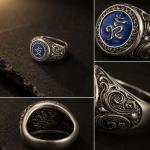
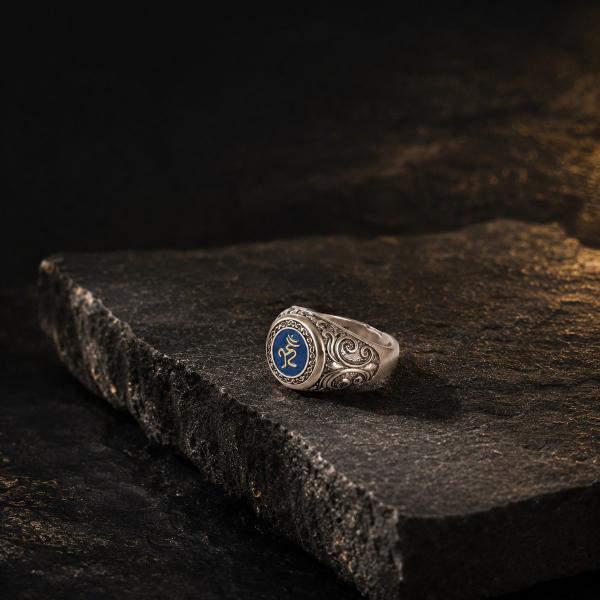
Here the syllable is cut in relief on the bezel, standing proud with a thin border left round it. Raised lettering collects dust, especially in the corners of the recess, and a dry soft brush sees to it in a couple of strokes; don't rinse and leave it wet, because water sitting in the gaps darkens them. The band is open and adjustable, and the bezel is narrow, which suits a little finger or stacking. If the raised edges are too sharp they catch the neighbouring finger, and the better work eases those edges round.
Both the Siddham and Lantsa scripts of Sanskrit are in use, and Tibetan writing has its own conventions. Space on a ring is small, so strokes are usually simplified; an elaborate form simply won't cut cleanly. The simplified letter is still that letter, just without the ornamental tails, and it is worth knowing that before buying — it isn't a fault. Darkness in the cuts is silver oxidation, some of which a dry soft brush will lift, and what stays does no harm.
With a subject like this, the recipient matters. An older relative with a Buddhist practice will like it; someone without one may find an unfamiliar script odd to wear. It works just as well bought for yourself — the geometry of the letter is handsome on its own. Open silver rings loosen with time, particularly for people who take them on and off, so keep each adjustment small and it will last longer. If the recipient follows Chinese Buddhism, the form of the Medicine Buddha's syllable may differ from the Tibetan one, so ask first.